MSW Programs in New York
An MSW is the minimum education requirement for licensed social work practice in New York. With your degree, you can pursue the Licensed Master Social Worker (LMSW) or Licensed Clinical Social Worker (LCSW) credential. Programs typically range from one to three years depending on enrollment status and advanced standing eligibility, with online, on-campus, and hybrid options available across the state.
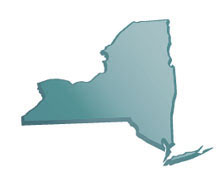
New York has one of the largest social work workforces in the U.S., according to federal labor data. It also has some of the strongest licensing requirements. The state requires an MSW for every level of licensed social work practice, which means the degree isn’t optional if you want to practice under a protected license.
That requirement works in your favor. It means employers know what they’re getting when they hire an LMSW- or LCSW-credentialed social worker, and it means your degree carries real weight in the job market. The question isn’t whether to get the MSW. It’s which program, which specialization, and which license you’re working toward.


What an MSW Enables in New York
New York issues two levels of social work licensure, and both require an MSW as the foundation.
The Licensed Master Social Worker (LMSW) is the entry-level credential. To qualify, you complete an MSW from a Council on Social Work Education (CSWE)-accredited program, apply through the New York State Education Department (NYSED) Office of the Professions, and pass the Association of Social Work Boards (ASWB) Masters-level exam. You’ll also complete a state-approved training on identifying and reporting child abuse before the license is issued.
The Licensed Clinical Social Worker (LCSW) is the advanced credential. It requires the same MSW foundation, but adds at least three years (36 months) of supervised post-graduate clinical experience, including at least 2,000 client contact hours in psychotherapy, diagnosis, and assessment-based treatment planning, plus the ASWB Clinical exam. The LCSW allows you to diagnose and treat mental health conditions independently and to open a private practice. An LMSW does not. That’s the distinction that matters most when you’re choosing a graduate program. If you want to do clinical work long-term, look for programs with a clinical concentration that will support your path to the LCSW’s supervised hours requirements.
For more details on both pathways, see our guide to social work licensure in New York. For a deeper look at how the LCSW compares to the MSW as credentials, including salary and scope of practice differences, see our full comparison.
MSW Specializations in New York
Most MSW programs share a common first-year curriculum covering social work theory, policy, ethics, and field practice. The second year is where programs diverge. Concentrations let you focus your training on the population or setting you plan to work in.
Common MSW concentrations available at New York programs include clinical practice with individuals and families, school social work, health care social work, mental health and substance abuse, child welfare, aging and gerontology, and community and organizational leadership. Schools like NYU Silver, Columbia, Fordham, and Hunter College each approach these concentrations differently, so it’s worth comparing curriculum details rather than just titles.
If you’re drawn to one-on-one therapeutic work, a clinical concentration is the clearest path to the LCSW. If you’re more interested in policy, administration, or organizational leadership, a macro-level concentration like community practice or management will serve you better. Choose based on where you realistically see yourself in five years, not just what sounds appealing now.
Advanced Standing MSW Programs
If you already hold a BSW from a CSWE-accredited program, you may qualify for advanced standing admission. Advanced standing programs allow you to waive the first-year foundational curriculum and complete your MSW in as little as one year of full-time study, or 12 to 24 months part-time, depending on the program.
Not every school offers advanced standing, and requirements vary. Most programs require that your BSW was earned within the past five years. Schools like NYU Silver, Fordham, Yeshiva University’s Wurzweiler School, and Binghamton University all offer advanced standing tracks. If you have a BSW, it’s worth applying to both standard and advanced standing tracks at the same time to compare your options.
Finding the Right MSW Program
Beyond specialization, a few practical factors should drive your program decision.
CSWE accreditation is non-negotiable. New York requires an MSW from a CSWE-accredited program for licensure. If a program isn’t accredited, your degree won’t qualify you to apply for the LMSW or LCSW. Verify accreditation status directly on the CSWE website or through the NYSED registered programs list before you apply.
Field placement is where the education becomes real. Most programs require 900 to 1,000 hours of supervised field experience across two placements. Ask programs specifically where students are placed, whether you’ll have input on your placement site, and how closely the placement matches your intended concentration. Online programs may require you to arrange your own field placement locally, although many schools provide placement support or coordination.
Cost varies significantly. Touro College charges the same tuition rate regardless of in-state or out-of-state residency, which is worth noting if you’re relocating. Public programs like Binghamton University or Stony Brook tend to offer lower tuition for New York residents. Private programs at Columbia or NYU carry higher sticker prices but may offer substantial scholarship and fellowship funding. Look at the net cost, not just the published tuition. Our guide to affordable CSWE-accredited MSW programs can help you compare options across the country.
Online MSW Programs in New York
Online MSW programs have expanded significantly since 2020. Programs at Binghamton, Fordham, Touro, and others are now fully or primarily online, with the same CSWE accreditation and curriculum as their on-campus counterparts. For a broader look at nationally accredited options, see our guide to fully online MSW programs.
The main tradeoff is face-to-face interaction. On-campus programs tend to offer more access to in-person mentorship, peer cohorts, and networking with New York-area agencies. Online programs offer flexibility that matters for working professionals, parents, or students who can’t relocate. Both formats lead to the same MSW and qualify you for the same licenses, provided the program is CSWE-accredited.
One thing online students should plan for: field placements are still in-person, regardless of program format. You’ll need to be within reach of social services agencies in your area to complete your hours.
Social Work Salaries in New York
New York consistently ranks among the highest-paying states for social workers. According to Bureau of Labor Statistics data from May 2024, the following includes related behavioral health and social service roles for comparison:
| Role | NY Median Annual Salary |
|---|---|
| Social Workers | $65,430 |
| Substance, Behavioral, and Mental Health Counselors | $62,070 |
| Social and Community Service Managers | $93,140 |
| Social and Human Services Assistants | $46,210 |
The gap between Social Workers and Community Service Managers reflects the difference licensure, specialization, and experience make over time. The LCSW credential, combined with years of post-licensure clinical work, is the most direct route to the upper end of the salary range in New York.
Job Outlook for Social Workers in New York
State-level projections indicate significantly faster-than-average growth in several social work categories in New York through 2032, particularly in healthcare and mental health roles. Child, family, and school social work, substance abuse counseling, and community service management are all projected to grow, with healthcare and mental health social work showing some of the strongest demand.
New York City, in particular, has a large concentration of hospitals, community mental health centers, child welfare agencies, and nonprofits that hire social workers at scale. Demand outside the city, including in upstate regions with more limited services, has also been growing steadily.
Frequently Asked Questions
Does New York require an MSW for social work licensure?
Yes. New York requires a Master of Social Work degree from a CSWE-accredited program for both levels of licensed social work practice: the Licensed Master Social Worker (LMSW) and the Licensed Clinical Social Worker (LCSW). There is no pathway to licensure in New York without an MSW.
What’s the difference between the LMSW and the LCSW in New York?
Both start with an MSW. The LMSW is the entry-level license and qualifies you to practice social work in most settings. The LCSW requires three years (36 months) of supervised post-graduate clinical experience, including at least 2,000 client contact hours, plus a second licensing exam. It authorizes independent clinical practice, including diagnosis and psychotherapy. If you’re planning on clinical or private practice work, the LCSW is the credential you’re working toward.
How long does an MSW program take in New York?
Full-time MSW programs typically take two years. Part-time programs often run three years. If you have a BSW from a CSWE-accredited program, advanced standing options can reduce the timeline to one year full-time or 18 to 24 months part-time, depending on the school.
Do online MSW programs in New York qualify you for the LMSW?
Yes, provided the program is CSWE-accredited. Accreditation is what determines licensure eligibility, not the delivery format. Online MSW graduates from accredited programs apply for licensure through the same process as on-campus graduates. You’ll still need to complete in-person field placements as part of the program.
What CSWE-accredited MSW programs are available in New York?
New York has a large number of CSWE-accredited MSW programs, including NYU Silver School of Social Work, Columbia School of Social Work, Fordham Graduate School of Social Service, Hunter College, Touro College, Yeshiva University’s Wurzweiler School, Binghamton University, and Stony Brook University, among others. The full current list is available through the NYSED Office of the Professions.
Key Takeaways
- The MSW is required: New York requires an MSW from a CSWE-accredited program for every level of licensed social work practice.
- Two licenses, one degree foundation: The LMSW and LCSW both start with an MSW, but the LCSW requires 36 months of supervised clinical experience with at least 2,000 client contact hours plus a second licensing exam.
- Advanced standing saves time: BSW holders from CSWE-accredited programs may qualify for advanced standing, reducing the MSW to one to two years.
- CSWE accreditation is non-negotiable: Verify a program’s accreditation status before applying. Unaccredited programs do not satisfy New York’s licensure requirements.
- New York salaries are above national averages: BLS data shows NY social workers earn a median salary of $65,430, with community service managers reaching $93,140.
Ready to find an MSW program in New York? Explore CSWE-accredited options and learn what each license requires in our state-by-state guide.
2024 US Bureau of Labor Statistics salary and employment figures for Social Workers, Social and Human Services Assistants, Social and Community Service Managers, and Substance Abuse, Behavioral Disorder, and Mental Health Counselors, reflect state and national data, not school-specific information. Conditions in your area may vary. Data accessed April 2026.