How to Become a Social Worker: 8 Steps to a Career in Human Services

Becoming a social worker requires a bachelor’s or master’s degree from a CSWE-accredited program, supervised post-graduate field experience, and a state license. Most paths take 4 to 8 years depending on your goals. A BSW qualifies you for entry-level roles. An MSW combined with clinical licensure is required for independent practice and mental health therapy.
Some professions exist because of a single era. Social work isn’t one of them. Mental health crises, substance use disorders, child welfare emergencies, housing instability, aging populations without adequate care: these aren’t temporary conditions tied to any one moment in history. They’re the ongoing realities that make social work both demanding and enduring. The country consistently needs more people who can do this work well.
Becoming a social worker and building a career around addressing these problems starts with developing real expertise through education. Every social worker needs at least a bachelor’s degree, and most will need a master’s. That’s four to six or more years of study, giving you the in-depth knowledge and training you need to handle the most sensitive situations.


After that comes supervised practice, most states require roughly two years and at least 3,000 hours of post-graduate fieldwork under a qualified supervisor before you can earn a license, though requirements vary. Then there are the licensing exams and state board requirements before you’re finally cleared for independent practice.
It’s a long path. But it draws people who have already decided the work is worth it.
What Your Workday Is Like as a Social Worker
8 Steps to Becoming a Social Worker
Step 1: Decide on Clinical vs. Non-Clinical Social Work
Step 2: Pick a Social Work Specialty
Step 3: Get an Education in Social Services
Step 4: Build Experience in The Field
Step 5: Get Licensed in Your State
Step 6: Earn a Professional Certification in Your Specialty
Step 7: Get a Job as a Professional Social Worker
Step 8: Continue Your Education
What a Degree in Social Work Will Cost
Social Worker Salary: What You Can Expect to Earn
The most important thing you’re going to need, though, isn’t something you can really be taught. It’s something that is already in you. A burning desire to right some of the wrongs in this world. A need to help other human beings. A commitment to service and social justice.
It can take close to a decade to become a fully licensed and independent social worker, but that drive will carry you through it. And it will make a difference to everyone you work with along the way.
What Your Workday Is Like as a Social Worker
Social work is a team effort that covers a whole lot of territory when it comes to delivering human services. We have a detailed definition of social work here on the site if you want to understand exactly how broad the job is.
There are some things every social worker will have in common in their day-to-day work. A good heart and empathy aren’t enough to get the job done. You also need to master real-world skills.
Meeting With Clients
Social work isn’t a job you take on if you don’t like talking to people. Meeting with clients face-to-face is the currency of social services. You build trust, gather information, and deliver reassurance by talking directly to people in need.
Those meetings can be formal and scheduled, or you might run into someone in your community who seems to need help. The skills you need to handle client meetings include listening, empathy, communication, adaptability, and strong organizational habits.
Mastering the Rules and Regulations That Govern Social Services
Many social workers work directly for government agencies, but even those who don’t still need to know the rules. Many of the forms of assistance your clients will be eligible for are filtered through complex laws and regulations. Your ability to read, understand, and interpret those rules is what gets people the help they need.
Coordinating With Community Members and Service Providers
Becoming a social worker means working with other agencies and providers. Social services are a team effort. Social workers are a conduit for specialized assistance that their clients need. No one expects you to perform a medical procedure or pay a client’s rent out of pocket. But you are expected to know how to get a client an appointment at a low-cost clinic or help fill out the paperwork for rental assistance programs.
That means spending a lot of time on the phone with assistance agencies, hospitals, and other service providers. You’ll need the communication skills to build relationships with people at those programs, and the tact to demand results for your clients without burning bridges.
Advocating for Individuals and Larger Social Causes
Social workers need to be able to pound on the table and make change happen. In some cases, you’ll do it on behalf of individual clients. Maybe you’re the only one speaking up at a custody hearing for a father desperate to maintain contact with his kids. Maybe you become the squeaky wheel that finally gets the attention of a hospital billing department over a mistaken charge passed on to a client.
Either way, it takes boldness to be a good social worker. The social injustice you confront often isn’t a one-off. It’s a symptom of a bigger systemic issue. You’ll need the willingness to take to the streets or the council chambers when that’s what it takes.
Ida Bell Wells: One of The First True Social Justice Warriors
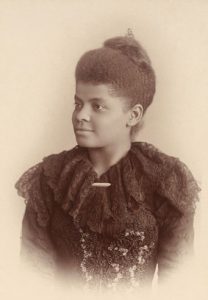 Ida Bell Wells was born into slavery in Mississippi in 1862. Technically freed by the Emancipation Proclamation when she was only three months old, she nonetheless grew up in a South where segregation and inequality were rampant.
As a journalist and activist, Ida was key in exposing illegal discrimination against Black Americans and uncovering the terrible realities of lynchings across the region. Threats over her work drove her to Chicago, where she expanded her activism from civil rights to women’s suffrage. Facing objections from both her enemies and her fellow white suffragettes, Wells persisted. Her exposés of the reality of white power affecting both Black men and sexual violence against Black women were a hundred years ahead of their time. Her organization against segregated schools prevented school segregation from ever taking root in Chicago.
In 2020, Wells was finally given some of the recognition her efforts deserved with the posthumous award of a Pulitzer Prize for her reporting on lynching.
Dropping Everything When Emergencies Arise
One of the most demanding parts of a social worker’s daily work is the stuff that doesn’t make it onto any list. Every social worker has moments when they have to drop everything and deal with an emergency. You’re working with people who are often on a knife-edge. From time to time, a wave of unplanned chaos will upend everything and demand your full attention.
That makes flexibility and the ability to think on your feet key daily skills. The phone is going to ring in the middle of lunch, and it’s going to be a hospital admission, a power shutoff, or police on a client’s doorstep. You have to be ready to catch whatever comes your way.
8 Steps to Becoming a Social Worker
For all the difficulty they deal with day to day, social workers will still tell you there’s no other job for them. Your path to becoming a social worker will be a long one. It’s going to test your patience, tolerance, empathy, and creativity. But you’ll learn a great deal along the way, both about yourself and about how to help those in genuine need.
Social work has historically drawn many students who are the first in their families to attend college, reflecting the field’s deep ties to the communities it serves. Many new social workers are climbing a harder hill than a typical student. Follow these steps carefully to give yourself the best chance at success.
Step 1: Decide on Clinical vs. Non-Clinical Social Work
One of the first important decisions you’ll make is whether to go into the clinical or non-clinical side of the profession.
Become a Clinical Social Worker
Clinical social workers handle the direct, intensive work of working with clients facing mental illness and behavioral issues through individual, group, or family therapies. You need higher qualifications for this role, usually a master’s degree. Along with that comes licensing, typically as a Licensed Clinical Social Worker (LCSW). That license gives you the authority to diagnose mental disorders, conduct psychotherapy, bill for certain services, and invoke provider/patient privileges.
Become a Non-Clinical Social Worker
Non-clinical social workers operate on a broader scale. They’re the people hammering out social services policies with city or state officials, or lining up donors for food banks and community programs.

A freshly-built tiny house community with the people who made it possible. Cavajunky, CC BY-SA 4.0 <https://creativecommons.org/licenses/by-sa/4.0>, via Wikimedia Commons
Depending on the state’s licensing laws, non-clinical workers can also provide counseling and case management to individual clients. In some states, they may need a license, but not one that comes with the same authority as an LCSW. Because of this, they don’t typically need as much education as clinical social workers.
Despite these differences, the National Association of Social Workers (NASW) is clear on one point:
Social work is a single profession with a distinct set of values, ethical principles, and standards.
The big dividing line between clinical and non-clinical practice comes down to licensing. Your state will have specific laws governing what services must be performed by an individual with a specific license, and those restrictions vary from state to state.
Step 2: Pick a Social Work Specialty
The National Association of Social Workers defines 16 different types of social work that you can specialize in. While you don’t have to be a specialist, modern social problems are complex enough that specialization tends to make you more effective.
This choice can shape everything: the schools you attend, the degree level you pursue, the license you’ll need, and the work you’ll do day to day. Here’s a summary of the major specialty areas:
- Administration and Management: Coordinating policy and action across social services agencies—a good fit if you enjoy organizing and leadership.
- Advocacy and Community Organization: Driving political and systemic change through community organizing. Draws those who want to fight for social justice at scale.
- Aging: Supporting older adults with challenges of daily living, disease, and vulnerability. Geriatric social work is a growing specialty given demographic shifts.
- Child Welfare: Working with children and families at risk. Requires a different set of tools and techniques than those used in adult-focused specialties.
- Developmental Disabilities: Advocating for individuals of any age who need extra support in learning and daily living.
- Health Care: Helping patients navigate the challenge of finding and paying for care. Healthcare is the leading driver of personal bankruptcy in the U.S.
- International Social Work: Searching beyond U.S. borders to support refugee- and asylum-seeker-at-risk populations and global human rights efforts.
- Justice and Corrections: Working with people cycling through the criminal justice system, or with victims of crime and assault.
- Mental Health and Clinical Social Work: Delivering mental health services through clinical assessment, diagnosis, and therapy.
- Mental Health and Substance Abuse: Addressing addiction and co-occurring mental health disorders. The opioid crisis and rising rates of mental illness have made this one of the field’s most needed specialties.
- Occupational and Employee Assistance: Supporting employed and unemployed people in navigating workplace challenges and finding assistance.
- Policy and Planning: Developing and analyzing large-scale solutions to social problems. A good fit for those who prefer research, data, and systems thinking.
- Politics: Moving from advocacy into elected office or political operations to drive lasting legislative change.
- Public Welfare: Administering major programs like Social Security, Medicare, and Medicaid from within government agencies.
- Research: Generating data and evidence that strengthen social services practice across the profession.
- School Social Work: Working with children in educational settings to address bullying, abuse, and social factors affecting learning.
There’s plenty of overlap. Every category needs administration and management. Clinical services apply across aging, child welfare, and mental health. The point is to pick a direction early, because it will shape the programs you apply to and the license you’ll need.
Step 3: Get an Education in Social Services
Once you’ve narrowed your focus to either clinical or non-clinical work and identified a specialization, you have what you need to pick an educational path. Non-clinical roles can often get by with a bachelor’s degree. Most clinical social workers, however, need at least a master’s degree.
What To Study To Become a Social Worker
Don’t treat your degree as just a credential to collect on the way to the job. It’s a foundation. At every level, social work programs cover similar core coursework: human behavior and psychology; social welfare policy and history; research methods and statistics; diversity and discrimination; and social justice and ethics. You’ll also get into the mechanics of the American healthcare system and basic pharmacology, both of which come up constantly in the field.
As you move into advanced degrees, these topics get deeper and more specific. Concentrations in substance abuse counseling, gerontology, or child welfare will shape how much time you spend on each subject.
Earning a Bachelor’s Degree
No matter your destination, a bachelor’s degree is your first step. A Bachelor of Social Work (BSW) is the most direct path, but it isn’t the only one. Many agencies hire administrative or entry-level workers who hold a bachelor’s degree in human services, psychology, or sociology.
A BSW also opens a significant door at the graduate level: advanced standing MSW programs. If you have a BSW from a CSWE-accredited program, many schools will let you complete your master’s in one year instead of two, because you’ve already covered the foundational coursework. If you think an MSW is in your future, a BSW is the most efficient route there.
You can learn more on our page about earning the Bachelor of Social Work (BSW) degree, and find cost options in our list of the most affordable BSW programs.
Earning a Master of Social Work
To get licensed and develop the skills you’ll need for clinical practice, a Master of Social Work (MSW) is the target degree. You can enter an MSW program even if you earned your bachelor’s in a different field. The two-year program covers the same ground as a bachelor’s-level social work program, with greater depth and a stronger research component.
The MSW also expands your fieldwork requirements, taking you out into the field with real social workers and giving you hands-on experience with clients and demanding situations in real agencies.
You can learn more on our page about earning the Master of Social Work (MSW) degree, or browse our guide to the best online MSW programs if you’re weighing flexible options.
Earning a Doctorate in Social Work
A PhD or Doctor of Social Work (DSW) degree is not required for any license, but it opens the most doors in terms of specialization and earning potential. Doctorates typically add four to six years to your education. The PhD is oriented toward academic research and is primarily for those heading toward faculty or research positions. The DSW is the practitioner-oriented terminal degree, with more clinical training and a practical capstone project.
You can learn more on our page about earning the Doctorate of Social Work degree.
Why CSWE Accreditation Matters
No matter what level you’re studying at, you need your program to be accredited by the Council on Social Work Education (CSWE), the only national accrediting agency recognized by the Council for Higher Education Accreditation (CHEA) for social work programs. Most states require a degree from a CSWE-accredited program to earn a license. Without accreditation, your degree may not qualify you to sit for the licensing exam.
Women’s Rights Activist and Social Justice Warrior: Jeanette Rankin
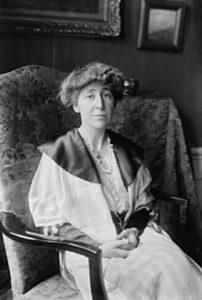 The thing about social work is that it doesn’t stay in one lane. Social work is disruptive by nature. Good social workers make changes. Great social workers make waves.
Jeanette Rankin was one of the greats.
Born on a ranch in Montana in 1880, she came from a family that had public welfare in its blood. A brother went on to become the state attorney general. A sister was the first woman to pass the state bar and advocate for access to birth control.
Jeanette was the eldest and took care of her younger siblings after her father passed away in 1904. She worked as a social worker in San Francisco and Spokane before attending the University of Washington and becoming a key player in the women’s suffrage movement. In 1910, her advocacy paid off with a state constitutional amendment guaranteeing women’s right to vote.
Returning to Montana, she took on the same social justice fights on a larger stage: the United States House of Representatives. She became the first woman elected to Congress in 1916, where she continued to work for universal suffrage and better conditions for federal and mine workers.
In 1941, Rankin became the only member of Congress to have voted against both world wars. Her courage and devotion to social justice were unquestioned, and her service continues to inspire new generations of social workers.
Step 4: Build Experience in The Field
After you get that degree in hand, you’re probably ready to get to work. Not so fast. Almost every path to becoming a licensed social worker requires additional supervised field experience before you can practice independently.
For LCSWs, hands-on, practical experience working with clients is considered non-negotiable.
You’ll get some of this during your master’s program (and, in some cases, your bachelor’s program). But that won’t be enough when it comes time to get your license. Almost every state requires 3,000 or more hours of postgraduate fieldwork under a qualified, approved supervisor. That’s at least two years of work after graduation. Depending on the state, you might need an intermediate license to complete that experience.
Supervised experience requirements vary considerably from state to state, both in total hours and in specific sub-requirements for supervision type and format. Check your state’s licensing board early in your education so your post-graduate experience will qualify when the time comes.
How To Get Supervised Experience
Your state chapter of the National Association of Social Workers is a strong resource for finding qualifying positions. You’ll also likely have had internship placements during your degree program. Those are natural networking opportunities that often lead to post-graduation placements.
If your job doesn’t offer supervision directly, you can often find an independently licensed social worker who will provide it. This typically comes with a fee because it involves additional hours on their end. Your position itself must constitute social work practice, regardless of where you work. Teaching or administrative work at a school, for instance, doesn’t count toward a school social worker’s experience hours. You need to have direct client contact.
Step 5: Get Licensed in Your State
Most states require that social workers have a CSWE-accredited degree in order to earn a license.
That degree is typically a master’s or above, although some states accept a BSW for certain license levels. Licensing standards and license types are set at the state level by dedicated boards. The differences from state to state are significant, and understanding your state’s system early is worth the time.
Every state relies on testing to verify your knowledge before granting a license. The Association of Social Work Boards (ASWB) administers standardized exams used nationwide. There are five exam levels: Associate, Bachelor’s, Master’s, Advanced Generalist, and Clinical. Each consists of 17 multiple-choice questions to be completed in four hours, administered through Pearson VUE test centers. Most states will also require a state-specific exam covering local laws and standards.
You’ll also need to submit verification of your experience, transcripts, and exam results, along with a completed application and fees to your state board. Most states conduct a criminal background check as part of this process.
Learn more on our page about the social work license. If you’re weighing clinical credentials, our comparison of LCSWs, LPCs, and LMHCS explains the key differences.
Step 6: Earn a Professional Certification in Your Specialty
Specialty certification isn’t required, but most professional social workers pursue it at some point. The NASW Credentialing Center offers credentials in a range of practice areas. Certification can strengthen your resume for leadership positions and highly compensated specialist roles.
Each credential requires a degree, a defined amount of post-graduate experience, and continuing education in the specialty area. You’ll also need to submit references and agree to comply with the NASW Code of Ethics. Here are the major credentials by area:
| Specialty Area | Credential | Degree Required | Experience | CE Hours |
|---|---|---|---|---|
| Leadership | Academy of Certified Social Workers (ACSW) | MSW | 2 years | 20 |
| Leadership | Diplomate in Clinical Social Work (DCSW) | MSW | 3 years | 30 |
| Addictions / Clinical | Certified Clinical Alcohol, Tobacco & Other Drugs Social Worker (C-CATODSW) | MSW | 2 years | 180 |
| Case Management | Certified Social Work Case Manager (C-SWCM) | BSW | 3 years | — |
| Case Management | Certified Advanced Social Work Case Manager (C-ASWCM) | MSW | 2 years | — |
| Clinical | Qualified Clinical Social Worker (QCSW) | MSW | 3 years | 30 |
| Gerontology | Social Worker in Gerontology (SW-G) | BSW | 3 years | 20 |
| Gerontology | Clinical Social Worker in Gerontology (CSW-G) | MSW | 2 years | 30 |
| Gerontology | Advanced Social Worker in Gerontology (ASW-G) | MSW | 2 years | 20 |
| Health Care | Certified Social Worker in Health Care (C-SWHC) | MSW | 2 years | — |
| Hospice & Palliative | Certified Hospice and Palliative Care Social Worker (CHP-SW) | BSW | 3 years | 20 |
| Hospice & Palliative | Advanced Certified Hospice and Palliative Social Worker (ACHP-SW) | MSW | 2 years | 20 |
| Military | Military Service Members, Veterans & Families: Social Worker (MVF-SW) | BSW | 2 years | 20 |
| Military | Military Service Members, Veterans & Families: Clinical (MVF-CSW) | MSW | 3 years | 30 |
| Youth & Family | Certified Children, Youth, and Family Social Worker (C-CYFSW) | BSW | 1 year | 20 |
| Education | Certified School Social Work Specialist (C-SSWS) | MSW | 2 years | — |
Step 7: Get a Job as a Professional Social Worker
The Bureau of Labor Statistics projects strong growth for social work across multiple specialty areas between 2022 and 2032. Healthcare social workers are projected to grow by 9.6 percent, with an average of 18,700 job openings per year. Mental health and substance abuse social workers are projected to grow by 10.6 percent, with around 9,500 annual openings. Child, family, and school social workers are projected to grow 5.3 percent, generating roughly 29,500 openings per year.
That’s strong demand across the board, with the most growth concentrated in health care and mental health settings.
Who Hires Social Workers?
The top five industries employing social workers, according to the BLS, are local government, individual and family services, ambulatory health care services, state government, and hospitals. Specialization shifts those numbers considerably. Mental health and substance abuse social workers are concentrated in ambulatory health care, outpatient care centers, and outpatient mental health facilities rather than government settings.
Your specialty will clarify which employers are your most realistic targets, and that usually becomes clear through your fieldwork placements during school.
Some Social Workers are Also Big Time Entrepreneurs
Not everyone is cut out for a nine-to-five working for The Man, even when The Man is all about helping people. You have another option: creating your own organization.
That was Scott Harrison’s path to founding charity: water in 2006.
Harrison wasn’t a likely candidate for social work. As a nightclub promoter, his work took him to the other side of the vices and addictions that most social workers spend their time cleaning up after. But after two years volunteering on a hospital ship off the coast of Liberia, he came home with a new mission: bring clean water to every living person without it.
With his background, traditional charities wanted nothing to do with Harrison. He decided to do something about it himself. The charity has raised hundreds of millions of dollars and funded water projects in dozens of countries worldwide.
Harrison is special, but not alone. All over the country and around the world, individuals with drive, education, and a mission decide to dig in and do what it takes.
Step 8: Continue Your Education
Continuing education is a permanent part of a social work career.
Required for both specialized certification and to maintain your licensure, you can expect to continue logging often 15 to 30 hours per year of class time, depending on state requirements, even after you’re fully employed and licensed.
Most states specify what those hours must cover. A certain percentage may be required in areas like HIV prevention, law and ethics, or suicide assessment. Certification renewals often require CE in your specialty area.
Professional Associations Offer Access to Continued Education and Opportunities
That continuing education typically has to come through an approved provider. The ASWB offers an Approved Continuing Education program that lists rigorously reviewed providers. Beyond the CE requirement, getting involved in professional associations opens doors for advancement, advocacy, and community in the field.
- National Association of Social Workers (NASW): The largest membership organization for professional social workers in the world, founded in 1955. Builds universal ethics standards and advocates for sound social policy across 55 U.S. chapters.
- National Association of Black Social Workers: Founded in 1968, dedicated to supporting Black social workers and enhancing the quality of life for people of African ancestry through social services.
- School Social Work Association of America: The only national social work group devoted exclusively to supporting social workers who serve in schools.
- North American Association of Christians in Social Work: Serves as a network and advocacy group for practitioners who integrate faith and professional practice.
- Clinical Social Work Association: Supports clinical social workers on issues including telehealth policy, counseling practice standards, and CE resources.
- International Federation of Social Workers: Connects social workers globally around issues too large for any one country to address alone.
What a Degree in Social Work Will Cost
Job satisfaction is real, but it doesn’t pay tuition. Social work education is a significant financial commitment, and going in with eyes open is important.
A two-year master’s degree at a public in-state school costs significantly less than attending a private institution, but neither is cheap. Private MSW programs typically run considerably more than public ones. And that’s on top of the bachelor’s program you’ll need to complete first.
Most social work graduates carry student loan debt. The Council on Social Work Education has tracked debt levels among graduates over the years, and the picture has historically been challenging. Entry-level social work salaries can make those payments feel heavy.
Scholarships
Scholarships are the best way to offset those costs if you can get them. Here are a few worth researching:
- Jewish Federation of Metropolitan Chicago Academic Scholarships: For Chicago-area Jewish students with financial need and career promise in the helping professions.
- National Association of Black Social Workers Scholarships: Awards between $1,000 and $1,500 for Black social work students with community service records and qualifying GPAs.
- Alma S. Adams Scholarship: A $5,000 grant for students focused on reducing tobacco use in disproportionately affected communities.
- National Federation of Republican Women National Pathfinder Scholarship: Three annual $2,500 grants for women in undergraduate or graduate programs focused on preventing drug and alcohol abuse.
Loan Forgiveness
Social work is a public service field, and that opens doors to loan forgiveness programs that can significantly reduce your debt burden over time.
The federal Public Service Loan Forgiveness (PSLF) program forgives remaining loan balances after 120 qualifying payments while working full-time for a government or nonprofit employer. Given that most social work jobs are in those sectors, many social workers are well-positioned to qualify.
The National Health Service Corps loan repayment program offers additional options for social workers in substance use disorder treatment or rural community settings operating in Health Professional Shortage Areas.
Social Worker Salary: What You Can Expect to Earn
According to the Bureau of Labor Statistics, the median annual salary for social workers was $61,330 as of May 2024, or $29.49 per hour.
Like any profession, that figure shifts based on experience, education, location, and specialization. Social workers with an MSW typically out-earn those with only a BSW, and doctoral-level practitioners earn considerably more than both.
The BLS tracks median annual wages by social work specialty:
| Specialty | Median Annual Wage |
|---|---|
| Healthcare Social Workers | $68,090 |
| Mental Health and Substance Abuse Social Workers | $60,060 |
| Social Workers, All Other | $69,480 |
| Child, Family, and School Social Workers | $58,570 |
Social workers in the top ten percent of the field earn $99,500 or more per year. And like many government-sector and nonprofit jobs, social work positions often come with strong benefits packages that add real value beyond base salary, including pension contributions and above-average health coverage.
The BLS also tracks median wages by industry. Social workers in educational services and local government settings tend to earn more than those in community services and individual family services:
| Industry | Median Annual Wage |
|---|---|
| Educational services (state, local, and private) | $67,620 |
| Local government (excluding education and hospitals) | $65,920 |
| State government (excluding education and hospitals) | $59,630 |
| Individual and family services | $51,430 |
| Community food, housing, emergency, and relief services | $49,980 |
For child, family, and school social workers specifically, wages vary significantly by state. The following states reported the highest median annual wages for this specialty as of May 2024:
| State | Median Annual Wage |
|---|---|
| Connecticut | $78,940 |
| District of Columbia | $78,920 |
| New Jersey | $78,150 |
| Washington | $72,290 |
| Maryland | $70,840 |
| California | $69,250 |
| Massachusetts | $67,880 |
| Rhode Island | $67,150 |
| New York | $65,430 |
| Vermont | $65,370 |
Frequently Asked Questions
How long does it take to become a social worker?
Most people spend 4 to 8 years becoming a social worker, depending on the level of license they’re pursuing. A bachelor’s-level license (LBSW) can be obtained in about 4 years. Reaching Licensed Clinical Social Worker (LCSW) status takes longer: a four-year BSW, a two-year MSW (or one year with advanced standing), and two or more years of supervised post-graduate experience before you can sit for the clinical licensing exam.
Can I become a social worker with only a bachelor’s degree?
Yes, in many states. A Bachelor of Social Work (BSW) from a CSWE-accredited program qualifies you for entry-level and non-clinical positions, and many states offer a bachelor’s-level license. You won’t be able to diagnose or treat mental health conditions independently with a BSW alone. Still, there’s a wide range of meaningful social work roles available at this level, including case management, child welfare, and community outreach.
What’s the difference between an LMSW and an LCSW?
A Licensed Master Social Worker (LMSW) has earned a master’s degree and passed the master’s-level ASWB exam, but typically still requires supervision for clinical work. A Licensed Clinical Social Worker (LCSW) has completed additional supervised clinical hours after the MSW, passed the clinical-level ASWB exam, and is cleared for independent diagnosis and treatment of mental health conditions. The LCSW is the credential required for private practice and billable therapy services in most states.
Do I need a social work degree specifically, or will another field work?
For entry-level, non-clinical roles, many employers accept bachelor’s degrees in related fields like psychology, sociology, or human services. But for clinical licensure (LCSW), virtually all states require an MSW from a CSWE-accredited program. If you already have a bachelor’s in another field and want to become a licensed clinical social worker, an MSW is the path forward, regardless of your undergraduate major.
What areas of social work pay the most?
According to the BLS May 2024 data, healthcare social workers and “all other” social workers (which includes administrative and specialist roles) earn the highest mean wages in the field. Nationally, healthcare social workers average $72,030 per year. Geographic location matters significantly, as social workers in metropolitan areas and higher cost-of-living states tend to earn more than those in rural regions.
Key Takeaways
- Start with a CSWE-accredited degree: A BSW gets you into entry-level roles. An MSW is required for clinical licensure and independent practice.
- BSW holders can accelerate their MSW: Advanced-standing programs let BSW graduates complete an MSW in one year rather than two at many accredited schools.
- Clinical licensure takes time beyond the degree: Most states require 3,000 or more supervised post-graduate hours before you can sit for the LCSW exam.
- State requirements vary significantly: Check your state’s licensing board early. Supervised experience rules, license types, and exam requirements differ in ways that can affect your whole educational plan.
- Growth is strongest in health care and mental health: BLS projects 9.6% growth for healthcare social workers and 10.6% for mental health and substance abuse social workers through 2032.
- Specialization affects both salary and career path: healthcare and specialist social worker roles tend to pay more on average. Choose your focus before graduate school, so your program and fieldwork align with your goals.
Ready to explore your options? Use our state-by-state licensing guide to look up requirements in your state and find CSWE-accredited programs that match your career goals.

2024 US Bureau of Labor Statistics salary and employment figures for Social Workers, Social and Human Services Assistants, Social and Community Service Managers, and Substance Abuse, Behavioral Disorder, and Mental Health Counselors, reflect state and national data, not school-specific information. Conditions in your area may vary. Data accessed April 2026.