MSW Programs in Maryland | Master of Social Work in MD
Maryland has three CSWE-accredited MSW programs: the University of Maryland Baltimore, Salisbury University, and Morgan State University. All offer traditional and advanced standing tracks. An MSW is required for licensure in Maryland and provides access to credentials including the LGSW, LCSW, and LCSW-C.
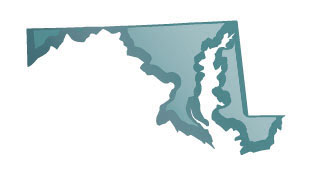
Social work in Maryland spans diverse settings. The state’s population spans the urban density of Baltimore, the federal corridors of the D.C. suburbs, rural communities on the Eastern Shore, and everything in between. That range contributes to demand for trained social workers across specialties, including child welfare, healthcare, mental health, and community services. An MSW is the degree that provides access to a wide range of roles.
Maryland requires an MSW for licensure. Without it, you would not be eligible to pursue the Licensed Graduate Social Worker (LGSW), Licensed Certified Social Worker (LCSW), or Licensed Certified Social Worker-Clinical (LCSW-C) credentials that most professional roles require. If you’re serious about a long-term career in social work in this state, the MSW is required for most professional roles in the field.


CSWE-Accredited MSW Programs in Maryland
There are three Master of Social Work programs in Maryland, all fully accredited by the Council on Social Work Education (CSWE). CSWE accreditation matters because Maryland’s licensing board requires it, and most other states do too, which gives your credential portability if you move. You can compare CSWE-accredited MSW programs by state if you’re weighing options beyond Maryland.
The University of Maryland School of Social Work (UMB) in Baltimore is one of the larger programs. It offers an MSW with concentrations in Clinical Social Work and Leadership, Policy, and Social Change. Programs run on the Baltimore campus and at the Universities at Shady Grove in Montgomery County. UMB also offers an advanced standing option for BSW holders with a reduced credit requirement.
Salisbury University operates its MSW program from its main campus in Salisbury and at satellite locations across the state, including Cecil College and the Eastern Shore Higher Education Center. The program requires approximately 60–62 credit hours and has an Advanced Direct Practice specialization, and Salisbury also offers a fully online option. It’s designed with working students in mind, with evening and summer courses, a hybrid format, and a part-time track that lets you finish in three years.
Morgan State University in Baltimore rounds out the three. Its MSW program focuses on urban communities and has a concentration in Urban Children, Youth, and Families. Morgan State offers both campus-based and online options and is one of the few programs in the region with that specific urban practice emphasis.
Advanced Standing Programs
If you already hold a Bachelor of Social Work (BSW) from a CSWE-accredited program, you may be eligible for advanced standing. All three Maryland schools offer it. Advanced standing typically cuts the time to a degree in half, from two years to one, by granting credit for your undergraduate social work education and skipping foundational coursework you’ve already completed.
Not every BSW holder qualifies automatically. Schools typically look at your undergraduate GPA, your field education record, and sometimes require that your BSW be recent. If you’re a few years out from your BSW, check directly with the admissions office at your target program about eligibility. The time and cost savings can be substantial enough that it’s worth the inquiry.
Choosing Between Campus, Hybrid, and Online
All three Maryland programs offer some mix of in-person, hybrid, and online instruction. A few things worth weighing:
Practicum hours are in-person regardless of your program format. Maryland’s licensing pathway requires supervised field hours, and those happen on-site at placement agencies. If you choose a fully online program, you’ll still need to arrange local placements. The program’s field office typically assists with coordination, but it’s something to plan for if you’re not near a major metro area. Our guide to fully online MSW programs covers options from schools across the country if you want to compare formats.
Concentration access can vary by format. At UMB, for example, the Shady Grove campus only offers the Clinical concentration. If you’re interested in the macro track (policy, community organizing, organizational leadership), this can affect available campus options. Check the specific program pages before applying.
Cost differs between in-state and out-of-state enrollment. For students already living in Maryland, all three state schools offer in-state tuition rates that are substantially lower than private alternatives or out-of-state rates. If cost is a major factor, running the numbers on in-state public programs versus online programs from schools in other states is worth the comparison.
What You Can Do with an MSW in Maryland
An MSW qualifies you for a wide range of roles in Maryland’s human services sector. Clinical social workers work in hospitals, outpatient mental health settings, and private practice. School social workers serve students across Maryland’s 24 school districts. Child welfare workers staff state and county agencies handling child protective services and foster care. Community organizers and program managers work in nonprofits serving everything from housing instability to substance use recovery.
The degree also qualifies you to work in roles tied to Maryland’s federal presence: government agencies, research institutions, and advocacy organizations in and around the D.C. corridor that are especially prominent in the region.
Licensure After Your MSW
Maryland has four license tiers for social workers, each with its own requirements:
- LSWA (Licensed Social Work Associate): entry-level, requires a BSW from a CSWE-accredited program
- LGSW (Licensed Graduate Social Worker): requires an MSW and allows supervised practice
- LCSW (Licensed Certified Social Worker): requires an MSW plus post-graduate supervised hours and passing the ASWB exam
- LCSW-C (Licensed Certified Social Worker-Clinical): requires an MSW with a clinical concentration, plus additional supervised clinical hours, and authorizes independent clinical practice and diagnosis
Most MSW graduates begin at the LGSW level and work toward LCSW or LCSW-C over two to three years of supervised practice. The clinical credential is what opens the door to private practice and independent therapy. For more details on Maryland’s licensing requirements, see our Maryland social work licensure guide.
Social Work Salaries in Maryland
According to the Bureau of Labor Statistics, Maryland social workers earn above the national median. Here’s how salaries break down for child, family, and school social workers in the state as of May 2024:
| Percentile | Annual Salary |
|---|---|
| 10th percentile | $45,230 |
| 25th percentile | $52,350 |
| Median (50th) | $70,840 |
| 75th percentile | $93,810 |
| 90th percentile | $105,830 |
Maryland’s median of $70,840 is higher than the national median of $58,570 for the same occupation. Healthcare and mental health social workers in the state also tend to earn above that figure. Job growth projections from the BLS show Maryland social worker positions growing about 10% to 14% from 2022 to 2032, depending on specialty, with mental health and substance abuse social workers projected at the high end of that range.
Frequently Asked Questions
Do I need an MSW to get licensed as a social worker in Maryland?
Yes. Maryland’s three upper-tier licenses, the LGSW, LCSW, and LCSW-C, all require an MSW from a CSWE-accredited program. The entry-level LSWA requires only a BSW, but it limits your scope of practice significantly. Most professional social work roles in the state require at least the LGSW, which means you need the MSW first.
How long does it take to complete an MSW in Maryland?
Traditional programs take two years full-time or three to four years part-time. Advanced standing programs for BSW holders typically take one year full-time. All three Maryland programs offer part-time tracks, so the timeline can flex depending on how many credits you take each semester.
Are Maryland’s MSW programs accredited by CSWE?
Yes. All three programs, University of Maryland, Baltimore, Salisbury University, and Morgan State University, are fully accredited by the Council on Social Work Education (CSWE). That accreditation is required for licensure in Maryland and is recognized by licensing boards in other states as well.
Can I complete an MSW program in Maryland online?
Both Salisbury University and Morgan State University offer online MSW options. UMB’s program is hybrid rather than fully online. Keep in mind that all formats require in-person field placements regardless of how coursework is delivered, so you’ll need to be able to complete supervised hours at a local agency.
What’s the difference between the LCSW and the LCSW-C in Maryland?
The LCSW is the general certified license, while the LCSW-C (Clinical) is the highest tier and authorizes independent clinical practice, including diagnosing mental health conditions and operating a private therapy practice. The LCSW-C requires a clinical concentration in your MSW program, plus additional supervised clinical hours beyond what the LCSW requires.
Key Takeaways
- Three CSWE-accredited programs. University of Maryland, Baltimore, Salisbury University, and Morgan State University all offer MSW degrees with traditional and advanced standing tracks.
- MSW required for licensure. You need an MSW to pursue the LGSW, LCSW, or LCSW-C in Maryland. Without it, your scope of practice is limited to the entry-level LSWA.
- Advanced standing cuts the time to the degree. BSW holders from accredited programs may qualify to complete their MSW in one year instead of two.
- Competitive salary levels. Maryland’s median salary for social workers ($70,840) is above the national median, and job growth is projected at about 10-14% through 2032.
- Format options exist. Online, hybrid, and campus programs are available, but all require in-person field placements regardless of how coursework is delivered.
Ready to look at your options? Compare Maryland’s MSW programs and explore licensing requirements for social workers in the state.
2024 US Bureau of Labor Statistics salary and employment figures for Social Workers, Social and Human Services Assistants, Social and Community Service Managers, and Substance Abuse, Behavioral Disorder, and Mental Health Counselors, reflect state and national data, not school-specific information. Conditions in your area may vary. Data accessed April 2026.