Louisiana LPC Requirements: How to Become a Licensed Professional Counselor
To become a Licensed Professional Counselor (LPC) in Louisiana, you need a 60-credit master’s degree in counseling, provisional licensure as a PLPC, 3,000 hours of supervised post-graduate experience completed over two to six years, and a passing score on either the NCE or NCMHCE exam. The process often takes approximately six to eight years, depending on program length and how quickly supervised hours are completed.
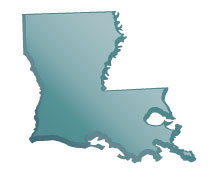
Louisiana’s mental health counseling field is growing, and the path to licensure here is structured but achievable. The state uses a two-tier system: you start as a Provisional Licensed Professional Counselor (PLPC) while you complete your supervised hours, then apply for your full LPC once those requirements are met. Understanding both tiers upfront will save you a lot of confusion as you plan your training. The Louisiana Licensed Professional Counselors Board of Examiners (the Board) oversees this entire process. For the most current requirements, visit lpcboard.org.
Education Requirements
The foundation of Louisiana LPC licensure is a graduate degree in professional mental health counseling from a regionally accredited institution. The program must include at least 60 graduate semester hours and cover eight specific content areas required by the Board.


Those eight content areas are: counseling and psychotherapy theories of personality, human growth and development, abnormal behavior, research and program evaluation, group dynamics and counseling, career and lifestyle development, appraisal and assessment of individuals, and professional ethics and identity. Your graduate program must address all eight.
Programs accredited by the Council for Accreditation of Counseling and Related Educational Programs (CACREP) are strongly preferred and generally considered to meet the Board’s standards automatically. If your program isn’t CACREP-accredited, it can still qualify as long as it meets the 60-hour minimum and covers all required content areas. Your program must also include a supervised practicum and internship in mental health counseling. The practicum requires at least 100 hours total, with 40 hours of direct client contact. The internship requires 600 hours, with 240 hours of direct contact. Both require individual and group supervision throughout.
The Two-Tier Licensure System: PLPC and LPC
Before you can accumulate supervised hours toward full licensure, you must register with the Board as a Provisional Licensed Professional Counselor (PLPC). This isn’t optional, and there is no retroactive credit. You cannot begin accruing hours toward LPC licensure until the Board has approved all three parts of your registration packet.
The PLPC registration has three sections: documentation of your education, your supervision plan, and your work setting. These can be submitted together or one at a time. Once approved, you have up to six years from the date of that approval to complete your supervised experience and move to full LPC status. Starting that clock is one of the most common points where new counselors lose time, so get your registration in promptly after graduation.
Supervised Experience Requirements
All 3,000 hours of supervised experience must be completed after you’ve obtained your PLPC registration. The hours break down as follows:
| Hour Type | Required Hours |
|---|---|
| Direct client contact | 1,900 minimum |
| Indirect client contact | 1,000 maximum |
| Face-to-face supervision | 100 minimum |
| Total required | 3,000 |
Your supervisor must hold the Louisiana LPC-S (Licensed Professional Counselor with Supervisor) designation. Supervisors must meet Louisiana LPC-S requirements, which include post-licensure experience and board-approved supervisor training. Check the Board for current supervisor qualification standards before beginning your supervision arrangement.
Louisiana may allow limited substitution of indirect hours based on additional graduate coursework completed beyond the required 60-hour minimum. Check current Board rules for exact limits and eligibility. Even with any substitution, you must still complete a minimum of 2,000 total supervised hours. All hours must be accrued within the two- to six-year window and documented and approved by your supervisor and the Board.
Examination
Louisiana accepts two exams for LPC licensure, both administered by the National Board for Certified Counselors (NBCC). You must pass one of them before applying for full LPC licensure. Check with the Board for current guidance on when the exam must be taken during the PLPC period.
The National Counselor Examination (NCE) is a 200-question multiple-choice exam covering counseling theory, practice, and interventions. The National Clinical Mental Health Counselor Examination (NCMHCE) uses clinical simulations to assess applied knowledge in assessment, diagnosis, and psychotherapy. Both exams are taken at testing centers. You’ll register through the NBCC’s ProCounselor portal. Suggested preparation materials are available through the NBCC.
Background Check and Application
All LPC and PLPC applicants must complete a state and federal background check through an approved provider. You’ll submit your application and supporting materials through an online account with the Board. The PLPC application fee is $100, and the LPC application fee is $200, though fees are subject to change. Check the current Board fee schedule at lpcboard.org before applying.
Continuing Education
Once licensed, you’ll renew your LPC every two years by June 30 of the renewal year. Renewal requires 40 hours of continuing education credits. If your license lapses, you have up to 2 years to renew, though late fees apply. Check the current Board fee schedule for exact amounts. After two years in lapsed status, the license expires, and you must reapply under the current requirements.
Licensure by Endorsement
If you’re already licensed as an LPC, PLPC, or LPC-S in another state and your original licensure requirements were substantially equivalent to Louisiana’s, you may apply for Louisiana licensure by endorsement rather than starting the process from scratch. You’ll need to submit official transcripts, verified exam scores from the NBCC, and a verified copy of your current out-of-state license. The endorsement application fee is $200. Contact the Board directly at lpcboard.org for current endorsement criteria, as equivalency determinations are made on a case-by-case basis.
Counselor Salaries in Louisiana
According to the Bureau of Labor Statistics, substance abuse, behavioral disorder, and mental health counselors in Louisiana earned a median annual wage of $40,200 as of May 2024 (figures subject to annual updates by the BLS). At the lower end of the range, the 25th percentile was $35,130, while counselors at the 75th percentile earned $53,560. Approximately 6,600 counselors work in this category across the state. Salaries can vary based on specialty, setting, and years of experience.
Frequently Asked Questions
Does Louisiana require a CACREP-accredited degree to become an LPC?
No, but CACREP accreditation is strongly preferred and often simplifies the application process. Louisiana will consider degrees from non-CACREP programs if the program is from a regionally accredited school, includes at least 60 graduate semester hours, covers all eight required content areas, and includes the required practicum and internship. Check directly with the Board if you’re uncertain whether your program qualifies.
How long does it take to become an LPC in Louisiana?
The process often takes approximately six to eight years, depending on program length and how quickly supervised hours are completed. A master’s degree typically takes two to three years. After graduation, your supervised experience must be completed within a window of at least two years and no more than six. Most candidates complete the full process in four to five years post-graduation, depending on their work setting and pace of hours accumulation.
Can I reduce my supervised hours requirement?
Louisiana may allow limited substitution of indirect hours based on additional graduate coursework completed beyond the required 60-hour minimum. However, you must still complete a minimum of 2,000 supervised hours. Check current Board rules for exact limits and eligibility before making plans around this option.
What’s the difference between the NCE and the NCMHCE?
The NCE is a 200-question multiple-choice exam that tests broad knowledge of counseling, including theory, human development, and interventions. The NCMHCE uses clinical simulations focused on applied clinical judgment in areas like assessment, diagnosis, and treatment planning. Louisiana accepts both for LPC licensure. Your choice may depend on your program’s focus on preparation or your intended specialty area.
How does licensure endorsement work in Louisiana?
If you hold an equivalent counseling license from another state, you can apply for Louisiana licensure by endorsement rather than completing the full process from scratch. The Board reviews your original licensure requirements to determine equivalency. You’ll need official transcripts, exam score verification from the NBCC, and a verified copy of your current out-of-state license. Decisions are made on a case-by-case basis. Visit lpcboard.org for current endorsement criteria and fees.
Key Takeaways
- Two-tier system: Louisiana requires PLPC provisional registration before you can begin accruing supervised hours toward the full LPC. There is no retroactive credit for hours started before Board approval.
- 60-credit graduate degree required: Your program must cover eight specific content areas and include a practicum and internship. CACREP accreditation is strongly preferred but not the only qualifying path.
- 3,000 supervised hours: Completed as a PLPC over two to six years, with at least 1,900 hours of direct client contact and 100 hours of face-to-face supervision under an LPC-S.
- Two exam options: Louisiana accepts either the NCE or the NCMHCE, both administered by the NBCC. A passing score is required before applying for full LPC licensure.
- Median salary of $40,200: BLS May 2024 data for substance abuse, behavioral disorder, and mental health counselors in Louisiana, with upper-range counselors reaching $53,560 at the 75th percentile.
Ready to explore your program options? Use our counseling program guide to find accredited master’s programs and learn what to look for when choosing a path toward Louisiana LPC licensure.
Salary data referenced here is specifically for substance abuse, behavioral disorder, and mental health counselors. 2024 US Bureau of Labor Statistics salary and employment figures for Social Workers, Social and Human Services Assistants, Social and Community Service Managers, and Substance Abuse, Behavioral Disorder, and Mental Health Counselors, reflect state and national data, not school-specific information. Conditions in your area may vary. Data accessed April 2026.