MSW Programs in California | Master of Social Work Degree CA
To earn an MSW in California, you’ll need a CSWE-accredited master’s program, with more than 25 options across the state. Most programs take two years for full-time students, though advanced standing options can compress that timeline for BSW holders. An MSW is required to pursue LCSW licensure in California.
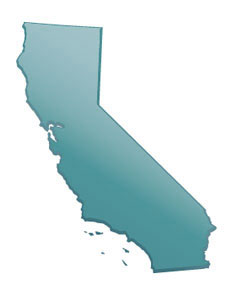 California has one of the largest social work education systems in the country. It’s also one of the most complex places to do this work. With 40 million residents, deep economic inequality, a chronically strained foster care system, and county behavioral health agencies that are perpetually understaffed, the need for trained social workers here isn’t abstract. It shows up in the caseloads.
If you’re drawn to clinical practice, child welfare, school-based services, or public health social work, you’re entering a large and active job market for social workers. The state employs more social workers than almost anywhere else in the country, and demand across every major specialty is projected to grow through 2032. What you need to get there is the right degree and, in most cases, a license. That starts with understanding what an MSW actually opens up for you.


What You Can Do with an MSW in California
The MSW expands what’s available to you well beyond an entry-level generalist role. Clinical licensure, administrative leadership, school-based work, and healthcare all become more accessible career paths once you have the degree. Here’s a look at where MSW graduates in California typically land:
| Career Title | Typical Work Setting |
|---|---|
| Licensed Clinical Social Worker (LCSW) | Private practice, community mental health centers |
| Child Welfare Case Manager | County child protective services agencies |
| School Social Worker | K–12 school districts statewide |
| Healthcare Social Worker | Hospitals, hospice, rehabilitation centers |
| Marriage and Family Therapist (MFT) | Outpatient therapy, private practice |
| Social Work Administrator | Nonprofits and government agencies |
| Social and Community Service Manager | State and county human services departments |
| Mental Health and Substance Abuse Social Worker | Behavioral health clinics, treatment centers |
The path you take will depend on the concentration you choose and whether you pursue licensure after graduation. Clinical licensure, specifically the Licensed Clinical Social Worker (LCSW) credential, is what allows you to diagnose and treat mental health conditions independently. It’s the most common advanced goal for MSW graduates in California, and it requires a specific sequence of steps after your degree. To understand what an LCSW career involves day-to-day, our career profile walks through the role in detail.
Choosing the Right MSW Program in California
California has more than 25 CSWE-accredited MSW programs, more than almost any other state. That’s good for access, but it means you have real decisions to make. Not every program is designed for the same kind of career, and the differences matter.
The most important filter is accreditation. If you plan to pursue LCSW licensure in California, your MSW must come from a program accredited by the Council on Social Work Education (CSWE). A non-accredited degree, even from an otherwise reputable school, won’t satisfy the state’s licensing requirement. This requirement is essential for licensure eligibility.
Beyond accreditation, here’s what to weigh as you compare programs:
| Factor | What to Look For |
|---|---|
| Concentration options | Does the program offer the specialty you want: clinical, school social work, child welfare, or healthcare? |
| Program format | Full-time, part-time, online, or hybrid. Does the schedule fit your current situation? |
| Advanced standing | If you hold a BSW from a CSWE-accredited program, you may finish in 12–16 months instead of two years |
| Field placement | Where do students intern? Are placements available in your area and area of interest? |
| Cost | Public CSU programs offer some of the most affordable in-state tuition in the country. Verify current rates directly with each school. |
The California State University system offers numerous publicly funded MSW programs. For most in-state students, that’s where the most affordable options are. Private universities, including USC’s Dworak-Peck School of Social Work, generally have higher tuition than public programs but may offer stronger alumni networks or specific concentrations. Check tuition directly with each school before making any financial decisions. If cost is a primary concern, our guide to the most affordable CSWE-accredited MSW programs covers options across the country. You can also learn more about the USC MSW Online Program if that’s on your list.
MSW Specializations in California
One advantage of studying in a state with this many programs is the range of concentrations available. Common specializations across California MSW programs include:
- Clinical practice: prepares you for LCSW licensure and direct therapeutic work with individuals and families
- Child and family services: many programs offer Title IV-E stipends for students who commit to county child welfare work after graduation
- School social work: focused on student wellbeing, IEP support, and connecting families to services in K–12 settings
- Healthcare social work: hospital discharge planning, palliative care, and helping patients navigate complex medical systems
- Mental health and substance abuse: tied closely to community mental health centers and California’s county behavioral health system
Not every program offers every concentration. If a specific specialty is central to your career goals, confirm it’s offered and that field placements in that area are available before committing to a program.
Online MSW Programs in California
Online programs have expanded access to the MSW significantly, particularly for working adults and students in areas without a nearby graduate program. With the 100% online Master of Social Work at the University of Kentucky, you can earn a CSWE-accredited MSW through an online program that meets California’s licensure requirements.
Several California State University campuses also offer online or hybrid MSW tracks, including CSU Chico, CSU San Bernardino, and San Jose State. Each requires you to complete field education hours in California, so confirm placement logistics with the program’s admissions office before applying. The coursework is flexible; the field hours are not. To compare fully online MSW programs beyond California, our national rankings cover the top-rated options.
The Path to LCSW Licensure in California
Many students who pursue an MSW in California have the Licensed Clinical Social Worker (LCSW) credential in mind. It’s what allows you to practice clinical social work, specifically diagnosing and treating mental health conditions, without supervision. Most clinical and therapy roles in California will eventually expect it.
Here’s the basic sequence:
- Earn your MSW from a CSWE-accredited program
- Accumulate 3,200 supervised hours post-graduation under a licensed supervisor, over a minimum of 104 weeks
- Pass the ASWB Clinical Exam, the Association of Social Work Boards exam required for clinical licensure in California
- Apply to the California Board of Behavioral Sciences (BBS)
The supervised hours phase is an important part of the process. That’s roughly two years of post-degree work before you can apply for the license. Plan your career timeline accordingly. Full details are available on our California Social Work Licensure page and directly at the Board of Behavioral Sciences.
Social Worker Salaries in California
California consistently ranks among the highest-paying states for social workers. According to the Bureau of Labor Statistics (May 2024), the median annual salary for Child, Family, and School Social Workers in California is $69,250. The top 25% earn $88,190 or more, and those in the 90th percentile exceed $102,000.
Job growth projections through 2032 show strong demand across all three major social work specialties in the state:
| Specialty | Projected Growth (2022–2032) | Avg. Annual Openings (CA) |
|---|---|---|
| Child, Family, and School Social Workers | About 10% | 4,090 |
| Healthcare Social Workers | About 18% | 2,140 |
| Mental Health and Substance Abuse Social Workers | About 19% | 1,620 |
Healthcare and mental health social work are growing faster than child and family services roles, driven in large part by California’s ongoing investment in community behavioral health infrastructure.
California Colleges with MSW Prerequisite and Preparation Degree Programs
| Specialty | Projected Growth (2022–2032) | Avg. Annual Openings (CA) |
|---|---|---|
| Child, Family, and School Social Workers | About 10% | 4,090 |
| Healthcare Social Workers | About 18% | 2,140 |
| Mental Health and Substance Abuse Social Workers | About 19% | 1,620 |
Healthcare and mental health social work are growing faster than child and family services roles, driven in large part by California’s ongoing investment in community behavioral health infrastructure.
California Colleges with MSW Prerequisite and Preparation Degree Programs
| School | School | School |
|---|---|---|
Allan Hancock College | Alliant International University | Antelope Valley College |
Bethany University | Cabrillo College (Aptos, CA) | California Polytechnic State University-San Luis Obispo |
California State Polytechnic University-Pomona | California State University-Chico | California State University-Dominguez Hills |
California State University-Fresno | California State University-Long Beach | California State University-Los Angeles |
California State University-Sacramento | California State University-San Bernardino | Cerritos College |
Chaffey College | Chapman University (Orange, CA) | City College of San Francisco |
Claremont Graduate University | College of the Canyons | College of the Sequoias |
Cosumnes River College | Cypress College | Dominican University 50 Acacia Ave San Rafael, CA 94901-2298 (415) 457-4440 http://www.dominican.edu/ |
El Camino Community College District | Fresno City College | Fresno Pacific University |
Fullerton College | Gavilan College | Hartnell College |
Holy Names University | Hope International University 2500 E Nutwood Ave Fullerton, CA 92831-3199 (714) 879-3901 | Humboldt State University |
John F Kennedy University | La Sierra University | Lake Tahoe Community College |
Lancaster Beauty School | Loma Linda University | Los Angeles Mission College |
Los Angeles Southwest College | Loyola Marymount University | Mills College |
MiraCosta College | Mission College | Monterey Institute of International Studies |
Mt San Antonio College | Mt. San Jacinto Community College District | National University 11255 North Torrey Pines Road La Jolla, CA 92037-1011 (800) 628-8648 http://www.nu.edu/Admissions.html |
Notre Dame de Namur University | Orange Coast College | Pacific Union College |
Pasadena City College | Point Loma Nazarene University | Porterville College |
Sacramento City College | Saint Marys College of California 1928 Saint Marys Road Moraga, CA 94556 (925) 631-4000 http://www.stmarys-ca.edu | San Diego City College |
| San Diego State University 5500 Campanile Dr San Diego, CA 92182 (619) 594-5200 | San Francisco State University 1600 Holloway Ave San Francisco, CA 94132 (415) 338-1111 | San Joaquin Delta College 5151 Pacific Ave Stockton, CA 95207 (209) 954-5151 http://www.deltacollege.edu |
Santa Ana College | Shasta College | Simpson University |
Taft College | The National Hispanic University | University of California-Davis |
| University of California-Irvine Irvine, CA 92697 (949) 824-5011 http://www.uci.edu/ | University of California-San Diego | University of Redlands |
University of San Francisco | University of Southern California | University of the Pacific |
West Hills College-Coalinga | William Jessup University |
Frequently Asked Questions
Do I need an MSW to become an LCSW in California?
Yes. California requires a master’s degree in social work from a CSWE-accredited program as the educational foundation for LCSW licensure. A non-accredited degree or a degree in a related field like psychology won’t satisfy this requirement. After earning your MSW, you’ll also need 3,200 supervised post-graduate hours and a passing score on the ASWB Clinical Exam.
What’s the difference between advanced standing and a traditional MSW?
Advanced standing is available to students who already hold a Bachelor of Social Work (BSW) from a CSWE-accredited program. It lets you skip first-year foundation coursework and finish the degree in roughly 12–16 months rather than two years. Not every California MSW program offers this option, so check before applying.
How many CSWE-accredited MSW programs are in California?
California has more than 25 CSWE-accredited MSW programs across the UC system, the California State University system, and several private universities. The CSU system offers numerous publicly funded MSW programs, making California one of the most accessible states in the country for this degree.
Can I complete an MSW online and still get licensed in California?
Yes, as long as the program is CSWE-accredited and your field education hours are completed in California. Several programs allow fully online coursework with California-compatible field placements. Confirm placement logistics directly with each program before you apply.
What MSW specializations are available in California?
Common concentrations include clinical practice, child and family services, school social work, healthcare social work, and mental health and substance abuse. Some programs also offer dual degrees that combine the MSW with public health or public administration. Check each program’s specific offerings, since not every school offers every track.
Key Takeaways
- CSWE accreditation is required for licensure. If you plan to pursue LCSW licensure in California, your MSW program must be accredited by the Council on Social Work Education
- California has 25+ accredited MSW programs. The CSU system offers the most affordable public options for in-state students
- LCSW licensure takes time beyond graduation. You’ll need 3,200 supervised post-degree hours and a passing ASWB Clinical Exam score before you can apply
- Advanced standing can shorten your path. BSW holders may finish in 12–16 months rather than two years
- California social workers earn above the national average. BLS data shows a median salary of $69,250 for child, family, and school social workers, with healthcare and mental health specialties growing at about 18–19% through 2032
Ready to take the next step? Review the full licensing requirements for social workers in California, or explore programs that match your career goals.
2024 US Bureau of Labor Statistics salary and employment figures for Social Workers, Social and Human Services Assistants, Social and Community Service Managers, and Substance Abuse, Behavioral Disorder, and Mental Health Counselors, reflect state and national data, not school-specific information. Conditions in your area may vary. Data accessed April 2026.