Alaska Social Work License Requirements: LBSW, LMSW, and LCSW
Alaska licenses social workers at three levels: the LBSW (bachelor’s), LMSW (master’s), and LCSW (clinical). Each requires a degree from a CSWE-accredited program, passing the corresponding ASWB exam, and an application to the Alaska Board of Social Work Examiners. The LCSW additionally requires two years of supervised post-graduate clinical experience.
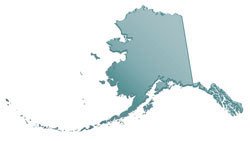
Alaska has a relatively high concentration of social work jobs compared to its population, driven by the state’s significant Alaska Native communities, rural and remote service gaps, and ongoing mental health and substance use challenges across the state. If you’re considering a licensed social work career in Alaska, the path is structured and achievable, but the requirements are specific. This guide walks through what it takes to earn each license level.
Licensing in Alaska is administered by the Board of Social Work Examiners (BSWE), a division of the Alaska Department of Commerce. All three license levels require a degree from a CSWE-accredited (Council on Social Work Education) program (including the University of Alaska), along with passage of the appropriate Association of Social Work Boards (ASWB) exam.
Do you know your education options? Begin or continue a degree: AS, BS, MSW, MS, PhD, Cert. Online and campus locations.


Alaska Social Work License Overview
Alaska issues three social work licenses, each corresponding to a level of education and scope of practice. Here’s how they compare at a glance.
| License | Degree Required | ASWB Exam | Supervised Hours | Scope |
|---|---|---|---|---|
| LBSW | BSW (CSWE-accredited) | Bachelors ($230 as of 2024) | None post-graduation | General social work, counseling, evaluation, prevention, and intervention services |
| LMSW | MSW or DSW (CSWE-accredited) | Masters ($230 as of 2024) | No supervised hours required for LMSW licensure; hours may be completed afterward to qualify for LCSW | Advanced generalist social work serves as the post-graduate stepping stone to LCSW |
| LCSW | MSW or DSW (CSWE-accredited) | Clinical ($260 as of 2024) | 2 years full-time or 3,000 hours part-time (within 10 years) | Independent clinical practice, diagnosis, and treatment of mental health conditions, private practice |
Licensed Baccalaureate Social Worker (LBSW)
The LBSW is Alaska’s entry-level license for social workers with a bachelor’s degree. It permits holders to provide counseling, evaluations, and prevention and intervention services. To apply, you’ll need a Bachelor of Social Work (BSW) from a CSWE-accredited program (including the University of Alaska).
Once you have your degree, you’ll submit an application to the Board with three professional references, official transcripts sent directly from your institution, and documentation of good moral character as determined by the Board. You’ll also need to pass the ASWB Bachelors exam ($230 as of 2024, subject to change, administered through Pearson VUE) within the two years prior to applying. A temporary one-year license is available for $75 while you prepare for and schedule your exam, provided your application is approved by the Board.
If you hold or previously held a license in another state, Alaska offers licensure by endorsement. You’ll need to verify 1,500 hours of work as a licensed social worker within the prior five years, along with 45 hours of continuing education completed in the same period. At least 6 of those CE hours must cover substance abuse-related topics, and 3 must cover professional ethics.
Licensed Master Social Worker (LMSW)
The LMSW requires a Master of Social Work (MSW) or Doctorate of Social Work (DSW) from a CSWE-accredited program (including the University of Alaska). It’s the credential you’ll hold while accruing the supervised clinical hours needed to pursue LCSW licensure.
The application mirrors the LBSW process: official transcripts, three professional references, and passage of the ASWB Master’s exam ($230 as of 2024, subject to change) within the two years prior to applying. A temporary license ($75) is also available at this level while your application is approved by the Board and your exam is pending.
For out-of-state applicants seeking licensure by endorsement, the same criteria apply as for the LBSW: 1,500 hours of licensed social work within five years and 45 CE hours, including the required substance abuse and ethics components.
Licensed Clinical Social Worker (LCSW)
The LCSW is Alaska’s clinical-level license. It allows you to independently diagnose and treat mental health conditions within the scope of licensure, operate a private practice in accordance with state regulations, and provide unsupervised social work services in public or private settings. You’ll need an MSW or DSW from a CSWE-accredited program (including the University of Alaska), an active LMSW, and completed supervised post-graduate clinical experience.
Alaska requires either two years of continuous full-time postgraduate clinical social work employment or at least 3,000 hours of part-time clinical experience over a minimum of two years. All supervised experience must be completed within 10 years prior to applying. Supervision must be provided by a licensed clinical social worker, licensed psychologist, or licensed psychiatrist. You’ll need to document 100 hours of direct supervision, and no more than 50 of those hours may be group supervision.
Once you’ve completed your supervised hours, you’ll apply for the LCSW through the Board and register for the ASWB Clinical exam ($260) through Pearson VUE. Total fees for the LCSW application are typically around $360, subject to change. Verify current fees with the Board. Alaska has announced upcoming changes to supervisor qualification requirements effective mid-2026. If you’re currently in your supervision period, check with the Board for current rules.
Continuing Education Requirements
All three license levels require 45 hours of continuing education per renewal cycle. Alaska renews licenses on a two-year cycle, and CE hours are due at each renewal. At least 10 of those hours must be completed through live, live online, or synchronous training (not self-study).
For initial renewal, required topics include: at least 6 hours in substance abuse, 3 hours in professional ethics, and 3 hours in suicide education (effective June 2023). Subsequent renewals require 6 hours in cross-cultural education, including at least 3 hours specifically on issues related to Alaska Native communities, as well as the ongoing 3-hour suicide education requirement. This Alaska Native-specific CE component is unique to Alaska and reflects the significant role social workers play in serving Indigenous communities across the state.
Reciprocity and the Social Work Licensure Compact
Alaska is not currently a member of the Social Work Licensure Compact. That means if you’re licensed in another state and want to practice in Alaska, you’ll need to apply for an Alaska license directly. The state does offer licensure by endorsement as an alternative to sitting for the exam again, provided you meet the work and CE history requirements described under each license level above. Contact the Board directly to confirm current endorsement eligibility, as requirements may change.
Social Work Salaries and Job Outlook in Alaska
Alaska offers competitive compensation for social workers. According to the Bureau of Labor Statistics, child, family, and school social workers in Alaska earn a median annual salary of $60,220, with a mean of $64,490 (May 2024 data). State projections show 7.7% growth for this occupation between 2022 and 2032, with an estimated average of 90 annual job openings.
Healthcare and mental health social work roles also show strong demand. Alaska projects 12.5% growth for healthcare social workers and 11.4% growth for mental health and substance abuse social workers over the same period, both outpacing the general workforce. For those pursuing clinical licensure, that demand signal matters when choosing where to invest years of graduate education and supervised practice.
Frequently Asked Questions
Does Alaska accept out-of-state social work licenses?
Alaska offers licensure by endorsement for applicants who hold or have held a license in another state. You’ll need to verify 1,500 hours of licensed social work within the prior five years and 45 hours of CE completed in that period. Alaska is not a member of the Social Work Licensure Compact, so there’s no streamlined reciprocity pathway. Endorsement is the primary route for out-of-state applicants.
What is the ASWB exam and how do I register?
The Association of Social Work Boards (ASWB) administers standardized licensing exams used by most U.S. states. Alaska requires the Bachelors exam for LBSW, the Masters exam for LMSW, and the Clinical exam for LCSW. Exam fees range from $230 to $260 as of 2024 and are subject to change. You register with the ASWB, then schedule your testing appointment with Pearson VUE at a testing center or via remote proctoring.
Can I practice as a social worker in Alaska while waiting for my exam results?
Yes. Alaska offers a temporary one-year license for both the LBSW and LMSW levels for a $75 fee. Your application must be submitted and approved by the Board before the temporary license is issued. This allows you to practice for an organization while studying and scheduling your licensing exam.
How long does it take to become an LCSW in Alaska?
The typical path takes five to seven years from start to finish. A BSW takes four years. An MSW typically takes two more (less with advanced standing). After earning your LMSW, you need at least two years of full-time supervised clinical experience before applying for the LCSW. All supervised hours must be completed within a 10-year window prior to applying.
What are Alaska’s continuing education requirements for licensed social workers?
All three license levels require 45 CE hours per two-year renewal cycle, with at least 10 hours completed through live or synchronous training. Required topics include substance abuse, professional ethics, suicide education (3 hours, effective 2023), and cross-cultural education with a specific focus on Alaska Native communities. The Alaska Native component is unique to this state’s requirements.
Key Takeaways
- Three license levels. Alaska issues the LBSW (BSW required), LMSW (MSW/DSW required), and LCSW (MSW/DSW plus 2 years supervised clinical experience).
- The ASWB exam is required for all levels. The Bachelor’s and Master’s exams are $230 each as of 2024, and the Clinical exam is $260. Fees are subject to change. Temporary licenses are available while you prepare.
- LCSW supervision has specific rules. You’ll need 100 hours of direct supervision, no more than 50 in a group setting, all completed within 10 years before applying.
- Alaska is not in the Social Work Licensure Compact. Out-of-state practitioners must apply through the endorsement process rather than compact reciprocity.
- Strong job outlook. Healthcare and mental health social work roles are projected to grow more than 11% through 2032, well above average for most occupations.
Ready to take the next step? Explore accredited social work programs in Alaska and find the degree path that fits your goals.
2024 US Bureau of Labor Statistics salary and employment figures for Social Workers, Social and Human Services Assistants, Social and Community Service Managers, and Substance Abuse, Behavioral Disorder, and Mental Health Counselors, reflect state and national data, not school-specific information. Conditions in your area may vary. Data accessed April 2026.