Alaska LPC Requirements: How to Get Licensed as a Counselor in AK
To become a Licensed Professional Counselor (LPC) in Alaska, you’ll need a 60-credit master’s degree in counseling or a related field, 3,000 hours of post-degree supervised experience over at least two years, and a passing score on either the NCE or NCMHCE exam. The Alaska Board of Professional Counselors issues the license and oversees all requirements.
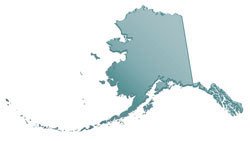
Alaska has more than 1,000 working counselors, according to the Bureau of Labor Statistics, and the state faces real demand, particularly in rural and remote communities where mental health services are hardest to reach. If you’re working toward licensure as a professional counselor in Alaska, the path is clear but not short. It takes careful planning across your graduate education, supervised experience, and the application process itself. If you’re still weighing counseling against social work, our Alaska social work licensure guide covers that path in detail.


This guide walks through every Alaska LPC requirement set by the Alaska Board of Professional Counselors (ABPC), including a new license type that took effect in 2025 and key changes to know before you start your supervised hours.
Alaska LPC Requirements at a Glance
The ABPC licenses professional counselors under Alaska Statute 08.29. To qualify for an LPC license in Alaska, you need to meet all of the following:
- A master’s or doctoral degree in counseling or a related field (minimum 60 graduate semester credits)
- Coursework covering at least 8 of 10 ABPC-required subject areas
- 3,000 hours of post-degree supervised clinical experience over a minimum of two years
- A passing score on the NCE or NCMHCE
- Two letters of recommendation from licensed professional counselors
- A criminal background check from Alaska State Troopers (and your state of residence if you live out of state)
- A completed application with all supporting documents and fees
Education Requirements
Alaska requires a master’s or doctoral degree in counseling, or a related field such as psychology, social work, marital and family therapy, or applied behavioral science. The degree must be from a regionally or nationally accredited institution approved by the ABPC and must include at least 60 graduate semester credits.
If your degree is in a related field rather than counseling directly, you can still qualify. You’ll need to complete enough additional graduate coursework in counseling to reach the 60-credit minimum, and a coursework check sheet must be submitted with your application in that case.
Your program must also cover at least 8 of the following 10 subject areas recognized by the ABPC:
- Helping relationships, including counseling theory and practice
- Human growth and development
- Lifestyle and career development
- Group dynamics, processing, and counseling
- Assessment and appraisal
- Social and cultural foundations
- Principles of etiology, diagnosis, treatment planning, and prevention
- Research and evaluation
- Professional orientation
- Specialty area
CACREP-accredited programs are a reliable way to meet these requirements. If your program isn’t CACREP-accredited, the ABPC’s coursework check sheet (available on the applications and forms page of their website) spells out exactly what you need to document.
Supervised Experience Requirements
After completing your degree, you’ll need to accumulate 3,000 hours of post-degree supervised professional counseling experience. The ABPC requires this to happen over a minimum of two years. You can’t compress it into less time, even if you hit the hour count faster.
Within those 3,000 hours, at least 1,000 must be direct counseling with clients, and at least 100 must be face-to-face supervision hours with your supervising counselor.
Your supervisor must be a board-approved Licensed Professional Counselor. This matters more than it might seem: under Alaska Statute AS 08.29.110(a)(6), the ABPC requires that your supervisor receive board approval before your supervised hours begin, not after. Hours accumulated under a supervisor who wasn’t yet board-approved at the start won’t count. Confirm your supervisor’s status with the ABPC before your first session.
Once your supervised experience is complete, your supervisor fills out a Post-Graduate Experience Verification form included in the application package and submits it directly to the ABPC.
The Associate Counselor License: What to Know
In 2024, Alaska’s Legislature passed House Bill 126, creating a new Associate Counselor license to recognize counselors as they accumulate supervised hours formally. The law had an effective date of July 1, 2025, but as of early 2026, the license type isn’t yet available.
The reason: new regulations are required before the license can be issued, and Administrative Order 358 has paused new rulemaking while state agencies focus on core services. The ABPC has noted it can’t provide a timeline on when regulations will be finalized. Until the Associate Counselor license is available, the ABPC advises candidates to continue accumulating unlicensed post-master’s hours under a board-approved supervisor, as they have done previously.
Check the ABPC’s website for updates. This is an active situation, and the requirements could change once regulations are finalized.
Examination Requirements
Alaska accepts two exams for LPC licensure, both administered by the National Board for Certified Counselors (NBCC):
- National Counselor Examination (NCE), which can be taken before completing supervised clinical hours
- National Clinical Mental Health Counseling Examination (NCMHCE), which must be taken after completing supervised clinical hours
The distinction matters. If you pass the NCE early in your career, you can use those results as part of your licensure application later, as long as your exam was passed within three years of applying. If you sit for the NCMHCE, you’ll need to have your supervised hours in hand first. Confirm with the NBCC which exam pathway fits your timeline before registering.
Exam scores must be sent directly from the NBCC to the ABPC. You’ll designate the board as a recipient when you register for the exam.
Application and Fees
When you’re ready to apply, you’ll submit a complete application package to the ABPC. The board requires all of the following before it will process your file:
- Completed application form (available via the MY LICENSE self-service portal or on paper)
- Official transcripts
- Exam results from the NBCC
- Post-Graduate Experience Verification form completed by your supervisor
- Two letters of recommendation from Licensed Professional Counselors who have worked with you professionally
- Criminal background check report from Alaska State Troopers (and from your state of residence if applicable)
The Alaska Board of Professional Counselors sets fees, which are subject to change. Verify current amounts on the ABPC website before submitting. Processing timelines vary depending on application volume and the completeness of your file. You cannot use the LPC title or practice independently until your license is issued.
Continuing Education Requirements
Alaska LPCs must complete 40 hours of continuing education during each two-year renewal period, including at least 6 hours focused on ethics. Licenses expire on the last day of your birth month in your renewal year and are valid for two years.
LPCs who want to offer distance counseling services (including telehealth) need an additional 6 hours of continuing education on distance professional services before adding them to their scope of practice. Given the number of Alaskans living in remote communities, this credential has become increasingly relevant for counselors working in the state.
Out-of-State Applicants: Licensure by Credentials
Alaska doesn’t have formal reciprocity agreements with other states, but licensed counselors from other states can apply for licensure by credentials. To qualify, your out-of-state license must reflect requirements that are substantially similar to or more stringent than Alaska’s, including at least 60 graduate credits in counseling, even if that wasn’t required in your original state.
Your out-of-state licensing board must complete a Verification of Licensure form and return it directly to the ABPC. Your license must be in good standing with no disciplinary actions on record.
What Counselors Earn in Alaska
According to the Bureau of Labor Statistics, substance abuse, behavioral disorder, and mental health counselors in Alaska earned a median annual salary of $63,690 as of May 2024. The national median for the same occupation was $65,100 during the same period.
The state employs roughly 1,060 counselors in this category, and the BLS projects continued demand for mental health and related professionals through 2032. Alaska’s ongoing challenges with rural access to mental health care, combined with high rates of behavioral health need, keep demand for qualified LPCs steady.
Frequently Asked Questions
How long does it take to become an LPC in Alaska?
Most candidates take seven to nine years from start to licensure. That includes two to three years for a bachelor’s degree, two to three years for a master’s degree (minimum of 60 credits), and at least two years of post-degree supervised experience. Processing timelines vary depending on application volume and the completeness of your file.
Does Alaska accept the NCMHCE instead of the NCE?
Yes. Alaska accepts both the National Clinical Mental Health Counseling Examination (NCMHCE) and the National Clinical Mental Health Counseling Examination (NCMHCE). The main difference is timing: the NCE can be taken before completing supervised hours, while the NCMHCE must be taken after. Both are administered by the National Board for Certified Counselors (NBCC).
Can I transfer my LPC license from another state to Alaska?
Alaska doesn’t have reciprocity agreements, but you can apply for licensure by credentials if your out-of-state license meets requirements that are at least as stringent as Alaska’s. You’ll need to document at least 60 graduate credits in counseling, regardless of what your original state required.
What is the Associate Counselor license in Alaska?
Alaska created the Associate Counselor license through House Bill 126 in 2024, intended for graduates accumulating their supervised hours. As of early 2026, the license isn’t yet available because regulations haven’t been finalized. Candidates should continue working under board-approved supervisors and monitor the ABPC website for updates.
How much does it cost to apply for an LPC license in Alaska?
The ABPC sets fees, which are subject to change. Check the ABPC website for current amounts before applying. You’ll also need to budget for NBCC exam fees and background check fees through the Alaska State Troopers.
Key Takeaways
- A 60-credit master’s degree is the baseline. Alaska requires graduate-level education in counseling or a closely related field, covering at least 8 of 10 ABPC subject areas.
- Supervised hours require board-approved supervision from day one. Your supervisor must be approved by the ABPC before your hours begin, not after.
- Two exam paths exist. The NCE can be taken before completing supervised hours. The NCMHCE requires supervised hours to be completed first.
- The Associate Counselor license exists on paper but isn’t yet available. Regulations haven’t been finalized as of early 2026. Check the ABPC website for updates.
- Out-of-state licensees can apply by credentials. There’s no formal reciprocity, but substantially equivalent licensure from another state qualifies you to apply.
Ready to explore your options? Browse counseling programs in Alaska and learn more about meeting the ABPC’s education requirements.
2024 US Bureau of Labor Statistics salary and employment figures for Social Workers, Social and Human Services Assistants, Social and Community Service Managers, and Substance Abuse, Behavioral Disorder, and Mental Health Counselors, reflect state and national data, not school-specific information. Conditions in your area may vary. Data accessed April 2026.