MSW Programs in Oklahoma
Oklahoma has two CSWE-accredited MSW programs: the University of Oklahoma (OU) and Northeastern State University (NSU). OU offers campus, hybrid, and online formats with concentrations in clinical and macro practice. NSU offers a campus-based program in Tahlequah with a focus on Indigenous and rural communities. Both accept students with non-social-work bachelor’s degrees.
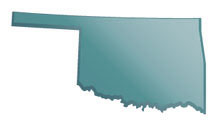
Oklahoma has an ongoing demand for social workers. The state’s child welfare system, rural healthcare gaps, and a significant Native American population (roughly 9% of residents) all contribute to ongoing demand for trained professionals across clinical and community settings. A Master of Social Work (MSW) opens the door to advanced practice in all of those areas, along with the licensure tracks that make independent clinical work possible.
There are two CSWE-accredited MSW programs in the state, both offering established options with flexible delivery formats. Here’s what you need to know to choose between them and decide which path fits your goals.


CSWE-Accredited MSW Programs in Oklahoma
Council on Social Work Education (CSWE) accreditation is the primary accrediting standard for MSW programs. It’s also a licensing requirement in Oklahoma: the Oklahoma State Board of Licensed Social Workers requires graduation from a CSWE-accredited program before you can sit for the LMSW or LCSW exam. Both programs below meet that requirement.
University of Oklahoma — Anne and Henry Zarrow School of Social Work
OU’s MSW program offers multiple flexible format options. It’s offered in three ways: on campus at the Norman location, in a hybrid format combining online instruction with weekly in-person sessions at the Tulsa campus, and fully online. The traditional track requires approximately 58–60 credit hours with required field education and takes two years full-time, or three to four years part-time. Students choose between two concentrations: Direct Practice (clinical social work) and Administration and Community Practice (macro social work).
For BSW graduates from a CSWE-accredited program subject to program-specific eligibility requirements, OU also offers an Advanced Standing track, an accelerated online-only format. Tuition is charged per credit hour (verify current rates with the university). Rolling admissions means you can apply for fall, spring, or summer starts.
Northeastern State University
NSU’s MSW program is campus-based, located in Tahlequah, with additional access points in Muskogee and Broken Arrow. The traditional track requires approximately 58–60 credit hours with required field education and can be completed in two years full-time or up to six years part-time. NSU takes an advanced generalist approach, meaning graduates are trained for both clinical and macro practice rather than specializing in one. Three focus areas let you direct your studies: Indigenous and Rural Communities, Behavioral Health, and Children and Adolescents.
NSU also offers an Advanced Standing track for BSW graduates, subject to program-specific eligibility requirements. Field education is built into both years of the program. If you’re drawn to working with tribal communities or in rural settings, NSU’s curriculum is designed to support work in those settings.
Campus vs. Online: Key Differences
Both OU and NSU offer flexible pathways, but the choice between campus-based and online study involves key differences. Here’s a direct comparison to help you think it through:
| Factor | Campus-Based | Online |
|---|---|---|
| Schedule flexibility | Fixed class times, set location | Asynchronous coursework, self-paced elements |
| Field education | Placements coordinated locally | Students arrange local placements; program assists |
| Peer interaction | In-person cohort experience | Synchronous sessions; virtual cohort |
| Tuition | Resident rates may be lower; fees vary | Charged per credit hour (verify current rates) |
| Best for | Students near Norman or Tahlequah prefer structure | Working professionals, students outside metro areas |
What You Can Do with an MSW in Oklahoma
An MSW qualifies you for a range of roles across direct practice and administration. The credential also puts you on the path to clinical licensure, which is required for independent therapeutic work. Common roles for MSW graduates in Oklahoma include child welfare case manager, healthcare social worker, school social worker, community service manager, and Licensed Clinical Social Worker (LCSW) in private or agency settings.
The Oklahoma State Board of Licensed Social Workers oversees a tiered licensure system. MSW graduates typically enter at the Licensed Master Social Worker (LMSW) level after passing the ASWB Master’s exam. To reach LCSW status and practice independently in clinical settings, you’ll need to complete post-graduate supervised experience as defined by the state board. For more on the specific requirements for each license tier, see our Oklahoma social work licensure guide.
Social Work Salaries in Oklahoma
According to the Bureau of Labor Statistics, social workers in Oklahoma earned a median annual salary of about $44,000 as of May 2024. The middle range of earners, from the 25th to 75th percentile, fell between about $37,000 and $52,000. The top 10% of earners in the state reached about $60,000.
Job growth projections indicate continued demand. BLS data projects about 5% growth in child, family, and school social work positions in Oklahoma between 2022 and 2032, with about 540 average annual openings. Healthcare social work is growing faster, at about 9%, with 300 average annual openings. Social and community service manager roles are projected to grow about 11%, with 160 annual openings.
Frequently Asked Questions
Are the MSW programs in Oklahoma nationally accredited?
Yes. Both the University of Oklahoma and Northeastern State University hold full accreditation from the Council on Social Work Education (CSWE), which is the primary accrediting standard and a requirement for Oklahoma social work licensure.
Can I complete an MSW in Oklahoma online?
Yes. OU offers a fully online MSW program with no campus visits required. It follows the same curriculum as the on-campus program and accepts rolling admissions for fall, spring, and summer starts. NSU’s program is campus-based.
What’s the difference between the traditional and advanced standing MSW tracks?
The traditional track is open to graduates of any bachelor’s program and typically takes two years full-time. The advanced standing track is designed for BSW graduates from CSWE-accredited programs. It builds on prior foundation coursework and can be completed in less time than the full program, subject to program-specific eligibility requirements.
Does an MSW automatically qualify me for clinical licensure in Oklahoma?
Not immediately. An MSW from a CSWE-accredited program qualifies you to sit for the LMSW exam. To become an LCSW and practice independently in clinical settings, you’ll also need to complete post-graduate supervised experience as defined by the state board.
What specializations are available in Oklahoma MSW programs?
OU offers concentrations in Direct Practice (clinical) and Administration and Community Practice (macro). NSU uses an advanced generalist model with three focus areas: Indigenous and Rural Communities, Behavioral Health, and Children and Adolescents.
Key Takeaways
- Two CSWE-accredited programs: Oklahoma has two MSW programs that meet state licensing requirements: the University of Oklahoma and Northeastern State University.
- Multiple formats available: OU offers campus, hybrid, and fully online options. NSU is campus-based in Tahlequah with a focus on Indigenous and rural communities.
- Advanced standing tracks exist: BSW graduates from CSWE-accredited programs can complete an accelerated track at both schools, subject to program-specific eligibility requirements.
- LCSW requires post-MSW supervised experience: Graduating is the first step. You’ll need to complete post-graduate supervised experience as defined by the state board before qualifying for the clinical license.
- Growing job market: BLS data projects healthcare social work in Oklahoma to grow about 9% through 2032, with hundreds of average annual openings across all social work categories.
Ready to explore your options? Compare program formats, review licensure requirements, and find the path that fits your goals.
2024 US Bureau of Labor Statistics salary and employment figures for Social Workers, Social and Human Services Assistants, Social and Community Service Managers, and Substance Abuse, Behavioral Disorder, and Mental Health Counselors, reflect state and national data, not school-specific information. Conditions in your area may vary. Data accessed April 2026.