Substance Abuse Counseling Certification in Illinois
Illinois certifies addiction counselors through the Illinois Certification Board (ICB) at four levels: the CADC, CRADC, CSADC, and CAADC. Requirements vary by credential, ranging from 2,000 supervised hours for the entry-level CADC to a master’s degree for the advanced credential. All require passing the ICB exam and working within the 12 Core Functions of addiction counseling. Requirements were updated by ICB in July 2025.
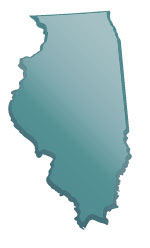
Illinois has a significant need for trained addiction counselors. The state has historically faced higher-than-average rates of substance use, and the demand for qualified professionals has continued to grow. The Illinois Certification Board (ICB), which operates under the Illinois Alcohol and Other Drug Abuse Professional Certification Association (IAODAPCA), oversees credentialing. There are four certification titles in Illinois, each designed for a different point in a counselor’s career. Understanding which credential fits your education and experience is the first step.


The Four Illinois Addiction Counselor Credentials
Illinois doesn’t have a single substance abuse counselor credential. It has four, and they build on each other. The entry-level credential is the Certified Alcohol and Drug Counselor (CADC). From there, counselors can pursue the Certified Reciprocal Alcohol and Other Drug Abuse Counselor (CRADC), which allows for practice across state lines. The Certified Supervisor Alcohol and Other Drug Abuse Counselor (CSADC) is designed for experienced counselors moving into supervision roles. The highest credential, the Certified Advanced Alcohol and Other Drug Abuse Counselor (CAADC), requires a master’s degree and is intended for clinicians working at the top of the field.
All four credentials require supervised work experience within the 12 Core Functions of addiction counseling: Screening; Intake; Orientation; Assessment; Treatment Planning; Counseling; Case Management; Crisis Intervention; Client Education; Referral; Reports and Record Keeping; and Consultation.
Requirements for CADC
The Certified Alcohol and Drug Counselor (CADC) is the starting point for most people entering the addiction counseling field in Illinois. ICB updated the CADC credentialing model in July 2025. Under the current model, here’s what you’ll need:
- Pass a criminal background check.
- Hold a high school diploma or GED at a minimum.
- Complete 2,000 hours of paid qualified work experience in the AODA (Alcohol and Other Drug Abuse) field. The previous degree-based work experience waivers were eliminated effective July 1, 2025.
- Complete 150 hours of supervision from a qualified supervisor, including at least 10 hours in each of the 12 Core Functions.
- Complete at least 225 hours of education. Of those, 100 hours must be AODA-specific, including 15 hours on addiction treatment for women and families, 15 hours on treatment for adolescents and families, and 6 hours of professional ethics. The remaining 119 hours must cover Professional Responsibility, Counseling, Case Management, Client Education, and Assessment.
- Pass the CADC Illinois Exam.
Requirements for CRADC
The Certified Reciprocal Alcohol and Other Drug Abuse Counselor (CRADC) is designed for counselors who want their Illinois certification recognized in other states. Under the current 2025 ICB Counselor Model, it carries substantially higher experience requirements than the CADC.
- Pass a criminal background check.
- Hold a high school diploma or GED at a minimum.
- Complete 6,000 hours of paid AOD-qualified work experience. Always confirm current degree-related requirements directly with ICB, as the 2025 model update affected how education factors into the credentialing process.
- Complete 300 hours of supervision from a qualified supervisor, including at least 10 hours in each of the 12 Core Functions.
- Complete at least 300 hours of education. Of those, 160 hours must be AODA-specific, including 30 hours on addiction treatment for women and families, 30 hours on treatment for adolescents and families, and 6 hours of professional ethics. The remaining 134 hours must cover Professional Responsibility, Counseling, Case Management, Client Education, and Assessment.
- Pass both the CRADC Illinois Exam and the ICRC Reciprocal Examination.
- Application forms and current credential model documentation are available at the IAODAPCA Credentialing page.
Requirements for CSADC
The Certified Supervisor Alcohol and Other Drug Abuse Counselor (CSADC) credential is for experienced counselors who have moved into, or want to move into, clinical supervision of other AODA counselors. It’s the most experience-intensive credential in Illinois.
- Pass a criminal background check.
- Hold a high school diploma or GED at a minimum. An associate’s or higher degree may reduce education requirements if the program covered the required AODA coursework.
- Complete 10,000 hours of supervised AODA work with clients.
- Complete one year and 2,000 hours as a clinical supervisor of AODA counselors.
- Complete 300 hours of supervision from a qualified supervisor, including at least 10 hours in each of the 12 Core Functions.
- Complete at least 350 hours of education. Of those, 190 hours must be AODA-specific, including 45 hours on addiction treatment for women and families, 45 hours on treatment for adolescents and families, and 6 hours of professional ethics. You’ll also need 30 hours in clinical supervision training. The remaining 124 hours must cover Professional Responsibility, Counseling, Case Management, Client Education, and Assessment.
- Pass the CADC Illinois Exam, the ICRC Reciprocal Examination, and the ICRC Supervisor Examination.
Requirements for CAADC
The Certified Advanced Alcohol and Other Drug Abuse Counselor (CAADC) is the highest credential available in Illinois. It requires a master’s degree and is intended for clinicians with advanced academic and supervisory experience. ICB revised the CAADC credential model in 2025; confirm current requirements at iaodapca.org/Credentialing before applying. Counselors weighing the CAADC against a clinical counseling license may also want to review Illinois counseling licensure requirements.
- Pass a criminal background check.
- Hold a master’s degree in a Behavioral Science with clinical application, such as Counseling, Social Work, Marriage and Family Therapy, or Psychology.
- Complete 2,000 hours of supervised AODA work with clients.
- Complete one year and 2,000 hours as a clinical supervisor of AODA counselors.
- Complete 300 hours of supervision from a qualified supervisor, including at least 10 hours in each of the 12 Core Functions.
- Complete at least 180 hours of AODA-specific education, including 45 hours on addiction treatment for women and families, 45 hours on treatment for adolescents and families, and 6 hours of professional ethics.
- Pass the ICRC AAODA Examination.
Salary and Job Outlook for Illinois Addiction Counselors
According to the Bureau of Labor Statistics, substance abuse, behavioral disorder, and mental health counselors in Illinois earned a median annual salary of $59,570 as of May 2024. Entry-level counselors (10th percentile) earned around $42,500, while experienced counselors at the top of the field (90th percentile) earned $107,630. Illinois employs approximately 18,170 counselors in this category statewide.
The job outlook for Illinois substance abuse and behavioral disorder counselors is strong. The occupation is projected to grow 17% between 2022 and 2032, with approximately 1,450 job openings per year. That growth rate outpaces most occupations and reflects the sustained demand for addiction treatment services across the state.
Maintaining Your Certification
Once certified, Illinois addiction counselors renew every two years. Renewal requires 40 ICB-approved continuing education (CE) hours per renewal cycle. Up to 15 of those hours can be completed through distance learning or home study. Counselors who don’t complete their CE hours by their renewal date risk having their certification lapse, so it’s worth tracking hours throughout the cycle rather than cramming at the end.
Frequently Asked Questions
Which Illinois credential should I start with?
Most people entering the field start with the CADC. It’s the entry-level credential and, following the July 2025 updates, now requires 2,000 hours of paid qualified work experience regardless of your education level. If you already hold a relevant degree, you may be able to meet the education-hour requirements more efficiently, but the work-experience requirement is now uniform at 2,000 hours.
Who oversees addiction counselor certification in Illinois?
The Illinois Certification Board (ICB), which operates under the Illinois Alcohol and Other Drug Abuse Professional Certification Association (IAODAPCA), oversees all four certification levels. The ICB administers exams, approves training programs, and handles renewals. Their credentialing page at iaodapca.org/Credentialing is the authoritative source for current requirements and application materials.
How long does it take to become a CADC in Illinois?
Under the current 2025 model, the CADC requires 2,000 hours of paid qualified work experience. At full-time pace in a treatment setting, that’s roughly one year. Add the 225 education hours and exam preparation, and most people complete the process in one to two years. The timeline depends largely on how quickly you can accumulate supervised work hours.
Is the CADC accepted in other states?
The standard Illinois CADC is a state-specific credential. If you plan to practice in another state, the CRADC is the better choice. It includes the ICRC Reciprocal Examination, which is recognized by member states of the International Certification and Reciprocity Consortium (IC&RC).
How much does CADC certification cost in Illinois?
The CADC exam fee is $175. After passing, you’ll pay a biennial certification fee of $140. Education and training program costs vary depending on whether you complete a formal degree program or a standalone ICB-approved training program.
Key Takeaways
- Four credentials, one ladder. Illinois certifies addiction counselors at the CADC, CRADC, CSADC, and CAADC levels, each with higher experience and education requirements than the last.
- CADC hours changed in 2025. Effective July 1, 2025, the CADC requires 2,000 hours of paid qualified work experience. The old degree-based hour reductions no longer apply.
- The CRADC travels. If you want your credential recognized across state lines, the CRADC includes the ICRC reciprocal exam that the CADC doesn’t.
- Renewal is every two years. All Illinois certifications require 40 CE hours per renewal cycle to stay active.
- Strong job outlook. Substance abuse and behavioral disorder counselors in Illinois are projected to grow 17% through 2032, with about 1,450 openings per year.
To explore degree programs that meet Illinois ICB education requirements and help you get started on your certification path, use the program search above.
2024 US Bureau of Labor Statistics salary and employment figures for Social Workers, Social and Human Services Assistants, Social and Community Service Managers, and Substance Abuse, Behavioral Disorder, and Mental Health Counselors, reflect state and national data, not school-specific information. Conditions in your area may vary. Data accessed April 2026.