South Dakota Social Work License Requirements: LSWA, LSW, CSW, and CSW-PIP
South Dakota offers four social work license levels: the LSWA, LSW, CSW, and CSW-PIP. Requirements range from an associate degree and one ASWB exam at the entry level to a master’s or doctoral degree plus two years of supervised clinical practice at the top tier. All licenses require 30 hours of continuing education every two years to renew.
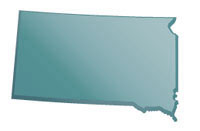
If you’re planning a social work career in South Dakota, the license you’re working toward determines what education you need, which ASWB exam you’ll take, and what kind of practice you’ll be eligible for. The state offers four distinct license levels, each building on the last. Whether you’re starting with an associate degree or finishing a master’s program, understanding the requirements for each tier will help you map your path before you apply.


South Dakota Social Work License Overview
The South Dakota Board of Social Work Examiners administers South Dakota’s four social work licenses. The licenses progress in scope and education requirements, from entry-level associate work to independent clinical practice. Here’s how the four tiers compare:
| License | Education Required | ASWB Exam | Supervised Experience | CE to Renew |
|---|---|---|---|---|
| LSWA | Non-social work bachelor’s, or board-approved AA in Human Services | Associate | None required | 30 hours (6 in ethics) |
| LSW | BSW or social welfare degree from a CSWE-accredited program | Bachelor | None required | 30 hours (6 in ethics) |
| CSW | MSW or DSW from a CSWE-accredited program (or Canadian equivalent) | Master | None required | 30 hours (6 in ethics) |
| CSW-PIP | MSW or DSW from a CSWE-accredited program | Clinical or Advanced Generalist Level | 2 years of supervised clinical experience in the intended specialty area | 30 hours (6 in ethics) |
Licensed Social Work Associate (LSWA)
The LSWA is South Dakota’s entry-level social work credential. It’s designed for people who have a bachelor’s degree in a field other than social work, or who hold a board-approved Associate of Arts degree in Human Services (or equivalent coursework as determined by the board). No field experience is required for this license.
To earn the LSWA, you’ll need to pass the Association of Social Work Boards (ASWB) Associate Exam. Once licensed, you must complete 30 contact hours of continuing education every two years to renew, with at least 6 of those hours in social work ethics.
Licensed Social Worker (LSW)
The Licensed Social Worker (LSW) requires a Bachelor of Social Work (BSW) or social welfare degree from a Council on Social Work Education (CSWE)-accredited program. If you don’t have a BSW, the board may accept a bachelor’s degree in another field combined with two years of social work experience and completion of board-approved social welfare coursework, subject to board approval.
There’s no field experience requirement for the LSW. You’ll need to pass the ASWB Bachelor Exam before the board will issue the license. Renewal follows the same 30-hour CE requirement as all other SD social work licenses.
Certified Social Worker (CSW)
The CSW is South Dakota’s master’s-level license. To qualify, you need a Master of Social Work (MSW) or a Doctorate in Social Work from a CSWE-accredited program. The board also accepts degrees from programs accredited by the Canadian Association for Social Work Education (CASWE).
No supervised field experience is required beyond what’s built into your graduate program. You’ll take the ASWB Master Exam to meet the exam requirement. As with all SD social work licenses, renewal requires 30 CE hours every 2 years, including 6 hours of ethics.
Certified Social Worker – Private Independent Practice (CSW-PIP)
The CSW-PIP is South Dakota’s top-tier clinical license. It allows independent practice and is the credential for social workers who want to work in private practice or provide clinical services without supervision.
To qualify, you need an MSW or doctoral degree from a CSWE-accredited school and verification of two years of supervised clinical practice in your intended specialty area. Once you’ve submitted your application, you’ll register with ASWB to take either the Clinical or Advanced Generalist Level exam. Passing that exam makes you eligible to receive the CSW-PIP.
How to Apply for a South Dakota Social Work License
The application process is the same across all four license levels, with variations in what documentation you’ll need to submit. Here’s what to expect:
Start by submitting your completed application to the South Dakota Board of Social Work Examiners along with official transcripts sent directly from your institution. You’ll also include any required supporting materials and pay the applicable application fee. For the CSW-PIP, you’ll need to provide supervisor verification of your supervised clinical hours.
Once the board approves your application, you’ll register with ASWB to schedule your exam at an approved testing location. After you pass and the board receives your scores, they’ll issue your license certificate. That certificate needs to be displayed at your place of practice.
For the most current application forms, fees, and instructions, visit the South Dakota Board of Social Work Examiners website directly.
Continuing Education Requirements
All South Dakota social work licenses are renewed every two years. To renew, you must complete 30 contact hours of continuing education within the previous two-year period. Six of those hours must specifically cover social work ethics.
Up to 30 hours may be completed through online courses, subject to board approval, which helps social workers in South Dakota’s more rural areas meet the requirement without traveling. Courses must be approved by the South Dakota Board of Social Work Examiners or by the licensing board of another state. If you develop and teach a new academic social work course or publish a professional paper, you may receive up to 10 contact hours credit for that work. Contact the board for the verification form.
South Dakota Social Work Salaries
According to Bureau of Labor Statistics data from May 2024, child, family, and school social workers in South Dakota earn a median annual salary of $53,140. The lower end of the range starts around $39,290, while experienced social workers in the state earn up to $68,100 at the 90th percentile.
Job growth projections for South Dakota social workers are positive. The BLS projects 5.6% growth for child, family, and school social workers between 2022 and 2032, with an average of 150 job openings per year across the state. That growth rate reflects both new positions and the steady need to replace workers who retire or change careers.
Frequently Asked Questions
What’s the difference between the CSW and CSW-PIP in South Dakota?
The CSW is the master’s-level license for social workers practicing in supervised or agency settings. The CSW-PIP is the independent practice license, requiring two additional years of supervised clinical experience and a higher-level ASWB exam. If you want to open a private practice or work without supervision, you’ll need the CSW-PIP.
Can I get an LSW in South Dakota without a BSW?
Yes, with conditions. The board may accept a bachelor’s degree in another field if you have two years of social work experience and complete a set of board-approved social welfare courses. Contact the South Dakota Board of Social Work Examiners to confirm which courses satisfy that requirement before you apply.
How long does it take to get a social work license in South Dakota?
Processing time depends on how quickly you submit complete documentation and how long it takes to schedule your ASWB exam. The board issues a license after receiving your passing exam scores. Incomplete applications or missing transcripts are the most common cause of delays.
How much does it cost to apply for a South Dakota social work license?
Application fees vary by license level. Verify the current fee schedule directly with the South Dakota Board of Social Work Examiners before applying, as amounts may change. Renewal fees are also required every two years.
Do South Dakota social work licenses require ethics training?
Yes. Of the 30 continuing education hours required for renewal, 6 must specifically cover social work ethics. This requirement applies to all four license levels and every renewal cycle.
Key Takeaways
- Four license tiers: South Dakota recognizes the LSWA, LSW, CSW, and CSW-PIP, each requiring progressively more education and, at the top level, supervised clinical experience.
- ASWB exam is required for all levels. The specific exam (Associate’s, Bachelor’s, Master’s, or Clinical/Advanced Generalist) depends on which license you’re pursuing.
- Independent practice requires the CSW-PIP. This top-tier license adds 2 years of supervised clinical experience and a higher-level ASWB exam to the CSW requirements.
- All licenses renew every two years—30 CE hours required, with 6 hours specifically in ethics.
- SD social worker is $53,140. According to the BLS May 2024 data, there are 150 average annual job openings projected through 2032.
Ready to meet the education requirements for South Dakota licensure? Explore accredited BSW and MSW programs that prepare you for the ASWB exam and meet CSWE standards.
2024 US Bureau of Labor Statistics salary and employment figures for Social Workers, Social and Human Services Assistants, Social and Community Service Managers, and Substance Abuse, Behavioral Disorder, and Mental Health Counselors, reflect state and national data, not school-specific information. Conditions in your area may vary. Data accessed April 2026.