Human Services Careers in Maine
Human services careers in Maine span mental health, child welfare, and community services, with consistent demand across the state. Entry-level roles typically require a bachelor’s degree in social work, psychology, or a related field. Clinical and management positions require a master’s. The Maine Department of Health and Human Services is the state’s largest employer of human services professionals.
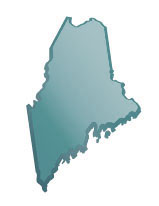
Maine’s human services workforce faces a challenge familiar to rural states: significant need spread across a geographically dispersed population. The Maine Department of Health and Human Services (DHHS) employs thousands of workers statewide, and that’s just one employer. Schools, hospitals, non-profits, and the state corrections system all rely on trained professionals to deliver services across the state.
The field ranges from entry-level support roles that don’t require a license to advanced clinical practice requiring graduate education and supervised hours. Where you start depends on your degree. Where you end up depends on how far you want to go.


Career Paths by Degree Level in Maine
A bachelor’s degree in social work, psychology, or sociology qualifies you for many of Maine’s entry-level and mid-level human services roles. Case management aides, community outreach workers, probation officers, and behavioral management aides in school settings all typically require a bachelor’s degree as a baseline. The Bachelor of Social Work (BSW) from a CSWE-accredited program is particularly useful if you’re planning to pursue licensure later, since it satisfies the academic foundation most state licensing boards require.
One credential worth knowing about early in your planning: the Mental Health Rehabilitation Technician/Community (MHRT/C) certification is commonly required or expected for many community mental health roles, particularly those tied to MaineCare-funded services. Some programs, including Southern Maine Community College’s Human Services Associate degree, may help students meet MHRT/C educational requirements, depending on coursework, so confirm with the program directly. If you know you want to work in community mental health in Maine, confirm early whether a program you’re considering includes this pathway.
A master’s degree opens clinical and management positions. The Licensed Clinical Social Worker (LCSW) credential allows independent clinical practice in mental health and family services settings. Licensed professional counseling and marriage and family therapy also require graduate-level education plus supervised post-degree hours. Social and Community Service Manager roles, which typically involve running programs at non-profits or government agencies, require an MSW, an MBA, or a related master’s degree, combined with field experience.
Salary and Job Outlook in Maine
According to the Bureau of Labor Statistics (May 2024), human services salaries in Maine vary considerably by role and education level. Social and community service managers top the scale, reflecting both the graduate-level education the role requires and the management responsibilities involved. Human service assistants earn less but represent the largest segment of the Maine human services workforce by total employment, with more than 4,600 workers in that category statewide.
| Occupation | Maine Employment | Median Annual Salary |
|---|---|---|
| Social and Human Service Assistants | 4,620 | $46,320 |
| Substance Abuse, Behavioral, and Mental Health Counselors | 1,610 | $60,970 |
| Child, Family, and School Social Workers | 1,910 | $62,620 |
| Social and Community Service Managers | 1,690 | $72,800 |
Maine’s 2022-2032 employment projections show a relatively stable workforce picture overall. In most human services categories, net job growth is flat to modest, but annual openings remain meaningful because of turnover and retirements. Human service assistants account for roughly 430 openings per year statewide. Healthcare social workers are projected to grow 4.2% over the decade, the strongest growth rate among the tracked categories. Social and community service managers and mental health and substance abuse social workers each show about 100 annual openings.
Specialization and Licensure in Maine
If your goal is clinical or licensed practice, Maine has defined pathways for social workers, counselors, and substance abuse specialists. Each credential has its own education requirements, supervised hours, and licensing exam. Understanding the requirements before you choose a program makes a real difference: the right accreditation (CSWE for social work, CACREP for counseling) and the right field placement can save you significant time on the back end.
Our Maine-specific guides cover each licensure pathway in full:
- Social Work Licensure in Maine, covering LSW, LMSW, LMSW-CC, and LCSW requirements
- Counseling Licensure in Maine, covering LPC and LCPC pathways
- Substance Abuse Counseling in Maine, covering CADC and LADC credentials
- MSW Programs in Maine, covering graduate social work programs and program options
Frequently Asked Questions
What degree do I need for a human services job in Maine?
Most entry-level roles require a bachelor’s degree in social work, psychology, sociology, or a related field. Some community mental health positions also require the Maine MHRT/C certification. Clinical and management positions typically require a master’s degree plus supervised post-degree experience before licensure.
What is the MHRT/C certification in Maine?
The Mental Health Rehabilitation Technician/Community (MHRT/C) is a Maine certification commonly required or expected for community mental health roles, particularly those tied to MaineCare-funded services. Some associate and bachelor’s degree programs may help students meet MHRT/C educational requirements, depending on coursework, so confirm with the program directly. If you plan to work in community mental health in Maine, look for programs that include this pathway rather than pursuing it separately after graduation.
What is the highest-paying human services career in Maine?
Social and community service managers earn the highest median salary among the major tracked occupations in Maine, at $72,800 per year, according to BLS May 2024 data. These roles typically require a master’s degree in social work, business administration, or a related field, along with direct service experience.
How do I become a licensed social worker in Maine?
Maine issues multiple social work license levels: Licensed Social Worker (LSW), Licensed Master Social Worker (LMSW), Licensed Master Social Worker-Clinical Candidacy (LMSW-CC), and Licensed Clinical Social Worker (LCSW). Each requires a degree from a CSWE-accredited program and a passing score on the relevant ASWB exam. The LCSW additionally requires supervised post-degree clinical hours. See our Maine social work licensure guide for the full requirements.
Where do human services professionals find work in Maine?
The Maine DHHS is the largest public employer in the field. Beyond state government, opportunities exist with school districts, hospitals, community mental health centers, non-profits, and the corrections and court systems. Maine’s geography means many roles involve working across large service areas or in community-based rather than office-based settings, which is worth factoring into your career planning.
Key Takeaways
- Entry-level roles require a bachelor’s degree in social work, psychology, or sociology. Clinical and management positions require a master’s degree and supervised post-degree hours.
- The MHRT/C certification is commonly required for many community mental health roles in Maine, particularly those tied to MaineCare-funded services.
- Social and community service managers earn a median of $72,800 per year in Maine, the highest of the four major tracked occupations.
- Annual job openings outpace net employment growth across most categories, driven by turnover and retirements in a large, stable workforce.
- Licensure pathways for social work, counseling, and substance abuse practice each have specific accreditation, exam, and supervised hours requirements in Maine.
Ready to explore your options in Maine? Browse our state-specific guides covering social work licensure, counseling credentials, and graduate programs.

2024 US Bureau of Labor Statistics salary and employment figures for Social Workers, Social and Human Services Assistants, Social and Community Service Managers, and Substance Abuse, Behavioral Disorder, and Mental Health Counselors, reflect state and national data, not school-specific information. Conditions in your area may vary. Data accessed April 2026.