MSW Programs in Washington State
Washington requires an MSW for all four levels of its social work licensure framework. The state has four CSWE-accredited universities offering MSW programs: the University of Washington, Eastern Washington University, Seattle University, and Walla Walla University. MSW graduates typically start at an associate license level and pursue full licensure after completing supervised practice hours.
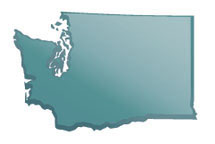
If you want to practice as a licensed social worker in Washington, the Master of Social Work (MSW) is required for licensure. The state ties all four of its licensure tiers directly to graduate education as a required step for licensure. This is relevant when evaluating programs and timelines before you apply.


Washington’s Four Licensure Tiers
Washington uses a four-tier system for social work licensure. Two are associate-level licenses awarded after completing an MSW. The other two are full practice licenses that require additional supervised hours and a board exam on top of the degree. All four tiers are tied to MSW-level education. For a full breakdown of requirements at each level, visit the Washington State Department of Health or review our Washington social work licensure guide.
| License | Level | Degree Required | Additional Requirements |
|---|---|---|---|
| LSWAIC | Associate / Independent Clinical | MSW | Entry-level clinical associate license; supervised hours required before advancing to full licensure |
| LSWAA | Associate / Advanced | MSW | Entry-level advanced practice associate license; supervised hours required before advancing to full licensure |
| LICSW | Full / Independent Clinical | MSW | Requires supervised post-MSW clinical hours and passing the appropriate ASWB exam as required by the state |
| LASW | Full / Advanced | MSW | Requires supervised post-MSW hours and passing the appropriate ASWB exam as required by the state |
CSWE-Accredited MSW Programs in Washington
Four universities in Washington hold accreditation from the Council on Social Work Education (CSWE), the national body that sets standards for social work graduate programs. If you’re still weighing whether a Master of Social Work degree is the right path, our MSW overview covers what the degree involves and the careers it leads to. CSWE accreditation is the baseline requirement for licensure eligibility in Washington, so it’s the first thing to verify when evaluating any program.
University of Washington
The University of Washington’s School of Social Work, based in Seattle, offers a traditional two-year MSW and a part-time evening track designed for working students. A separate campus in Tacoma operates its own program through UW Tacoma’s School of Social Work and Criminal Justice. Both campuses have advanced standing tracks for students who already hold a CSWE-accredited BSW. UW’s Seattle program includes concentrations in mental health practice and administration and policy, which matters if you’ve already narrowed down a career direction.
Eastern Washington University
Eastern Washington University (EWU) runs one of the more flexible MSW programs in the state. It operates out of three locations: the main Cheney campus, a hybrid program in Everett, and the EWU Spokane campus. Full-time students complete approximately 90 credits of graduate coursework over two years. The Everett hybrid option, which combines online coursework with in-person evening sessions, is built for students who can’t step away from full-time work or family obligations. EWU also participates in the Child Welfare Training and Advancement Program (CWTAP), a conditional scholarship for students who commit to post-graduation work with the Washington Department of Children, Youth, and Families.
Seattle University
Seattle University’s MSW is a clinical program built around three areas of sub-specialization: addictions counseling, medical and health social work, and trauma-informed practice. It’s designed to be completed in two years of full-time study, with required supervised field education hours completed across both years. An advanced standing option is available for qualifying BSW graduates.
Walla Walla University
Walla Walla University offers its MSW through a hybrid format that combines online coursework with in-person sessions, which makes it accessible to students outside the Seattle metro area. Both traditional and advanced standing tracks are available.
Advanced Standing Programs
If you already hold a BSW from a CSWE-accredited program, most Washington schools offer an advanced standing option that shortens the path to the MSW. These programs skip the foundation year and focus on specialized or advanced practice. Eligibility generally requires that your BSW was completed within a timeframe set by the program, and some programs expect continued engagement in the field since graduation.
Online MSW Options
None of Washington’s four in-state programs offers a fully online MSW. All require in-person components, including field education. If an online format is important, CSWE-accredited programs from out-of-state schools can still meet Washington’s licensure requirements as long as you complete approved field placements in-state. Many nationally recognized online MSW programs accept Washington students and coordinate local placements. Confirm any out-of-state program’s acceptability with the Washington State Department of Health before enrolling.
How to Choose the Right Program
Start with what you want to do after graduation. If clinical work draws you, including individual therapy or mental health assessment, look for programs that prepare graduates for the Licensed Independent Clinical Social Worker (LICSW) credential and offer a clinical concentration. UW Seattle and Seattle University are common options for this path in Washington. If you’re more interested in community practice, policy, or organizational leadership, EWU’s generalist advanced practice curriculum addresses those areas.
For students in eastern Washington or those who need a part-time format, EWU’s Everett hybrid program and Walla Walla University’s hybrid track may be appropriate options. Once you’ve identified programs that fit your career goals and schedule, compare total cost, field placement support, and concentration depth. Resident tuition at public schools like EWU is considerably lower than non-resident rates, so location matters financially too.
Career Outlook for Social Workers in Washington
Washington is a strong state for social work employment. According to the Bureau of Labor Statistics, social workers in Washington earn a median annual salary of about $72,000. Those in the top quarter of earners reach about $84,000 or more. The state’s outlook through 2032 is consistent across every major specialty: child, family, and school social workers are projected to grow about 11%, healthcare social workers about 13%, and mental health and substance abuse social workers about 15%. Social and community service managers, a common destination for MSW graduates who move into leadership roles, are projected to grow about 16% over that same period.
Washington also has higher rates of reported mental illness compared to national averages. This may contribute to the demand for trained clinical social workers that a well-chosen MSW program prepares graduates to address.
Frequently Asked Questions
Is an MSW required to become a licensed social worker in Washington?
Yes. Washington requires an MSW for all four of its social work license tiers, including both the associate and full practice licenses. A BSW qualifies you for some direct service roles, but there is no standard pathway to licensure without a master’s degree.
How many CSWE-accredited MSW programs are there in Washington state?
There are four universities: the University of Washington (Seattle and Tacoma campuses), Eastern Washington University, Seattle University, and Walla Walla University. CSWE accreditation from the Council on Social Work Education is the standard Washington requires for licensure eligibility, so it is a required consideration when choosing a program.
What is an advanced standing MSW program?
An advanced standing program is a shortened MSW track for students who already hold a CSWE-accredited BSW. It skips the foundation year and focuses on advanced or specialized practice. Most Washington schools offer advanced standing options that reduce the program length significantly compared to a traditional track. Eligibility requirements, including how recently the BSW was completed, are set by each individual program.
Can I use an online MSW for Washington state licensure?
Yes, if the program holds CSWE accreditation. None of Washington’s in-state schools offer a fully online MSW, but graduates of accredited online programs from out-of-state schools can meet Washington’s licensure requirements by completing field education through a Washington-approved placement site. Verify the program’s acceptability with the Washington State Department of Health before you enroll.
What careers can an MSW lead to in Washington beyond clinical work?
MSW graduates work across child welfare, healthcare, school settings, nonprofit management, policy, and community services. Leadership positions as a social and community service manager are a frequent path for MSW holders who want to move into program or organizational management. BLS data projects about 16% growth for that role in Washington through 2032.
Key Takeaways
- MSW is required for licensure. Washington ties all four social work license tiers to graduate education. There is no standard pathway to a state license without a master’s degree.
- Four accredited universities offer MSW programs in-state. UW, EWU, Seattle University, and Walla Walla University are Washington’s CSWE-accredited options, with campuses in Seattle, Tacoma, Cheney, Spokane, Everett, and Walla Walla.
- Advanced standing shortens the path for BSW holders. Qualifying graduates can complete the MSW more quickly through advanced standing tracks available at most Washington schools.
- Demand is projected to grow across all specialties. BLS projections show approximately 11 to 16% growth in Washington’s major social work occupations through 2032, with a median salary of about $72,000 for social workers statewide.
Ready to take the next step? Review Washington’s full licensure requirements and explore programs that match your career goals.
2024 US Bureau of Labor Statistics salary and employment figures for Social Workers, Social and Human Services Assistants, Social and Community Service Managers, and Substance Abuse, Behavioral Disorder, and Mental Health Counselors, reflect state and national data, not school-specific information. Conditions in your area may vary. Data accessed April 2026.