MSW Programs in Idaho: 2026 Guide to CSWE-Accredited Degrees
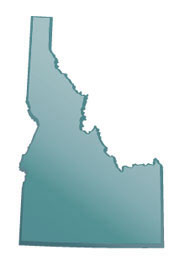
Idaho has three CSWE-accredited MSW programs: Boise State University, Idaho State University, and Northwest Nazarene University. All three now offer online delivery options, but Boise State remains the only fully asynchronous program. A CSWE-accredited MSW is required for LMSW and LCSW licensure in Idaho.
If you want to practice social work at the clinical level in Idaho, the path runs through a Master of Social Work (MSW) degree. The credential grants licensure as a Licensed Master Social Worker (LMSW), the gateway to practicing independently as a Licensed Clinical Social Worker (LCSW). Without the MSW, that door stays closed. This guide covers the accredited programs in Idaho, what to expect from each, and the job market for MSW-trained social workers across the state.


CSWE-Accredited MSW Programs in Idaho
Three schools in Idaho hold Council on Social Work Education (CSWE) accreditation for graduate social work programs: Boise State University, Idaho State University (ISU), and Northwest Nazarene University (NNU). CSWE accreditation matters because Idaho’s licensure board requires graduation from an accredited program before you can sit for the ASWB exam. A degree from a non-accredited school won’t qualify you for LMSW or LCSW licensure.
| School | Format | Specializations | Advanced Standing | Field Hours (Traditional) |
|---|---|---|---|---|
| Boise State University | Campus + fully online (asynchronous) | Direct Practice with Individuals and Families | Yes | 1,000 hours |
| Idaho State University | Campus + online (synchronous, evenings) | Children and Families: Forensic Social Work Practice | Yes (34 credits) | 900 hours |
| Northwest Nazarene University | Campus + online (synchronous, evenings and weekends) | Clinical Mental Health and Addictions: Integrated Clinical and Community Practice | Yes | 900 hours |
Boise State’s MSW program has held CSWE accreditation since 1992 and focuses on direct practice with individuals and families. ISU’s program, which received initial CSWE accreditation in 2018, offers two specialized practice areas: Children and Families and Forensic Social Work. The forensic track is distinctive in Idaho and prepares graduates for roles in courts, corrections, and legal advocacy settings. NNU, accredited since 2001, takes a faith-informed approach and offers two concentrations, allowing students to specialize in clinical mental health and addictions work or in a blend of clinical and community-level practice. If you’re also comparing tuition across states, see our guide to the most affordable CSWE-accredited MSW programs.
Advanced Standing MSW Options
If you hold a BSW from a CSWE-accredited undergraduate program, you may qualify for an advanced standing track at any of the three Idaho schools. Advanced standing programs allow you to skip foundation-year coursework and move directly into specialization. At ISU, advanced standing students complete the degree in 34 credits compared to 63 for standard admission. At Boise State, the advanced standing path cuts roughly a year from the standard two-year timeline. NNU’s advanced standing track runs four semesters, or about 16 months, and requires 600 hours of field education rather than the traditional track’s full requirement.
The key requirement is that your BSW must come from a CSWE-accredited program. A human services degree or social work-related bachelor’s won’t qualify on its own. If you’re not sure whether your undergraduate program was accredited, the CSWE maintains a searchable database on its website.
Online vs. On-Campus MSW Programs in Idaho
All three Idaho MSW programs now offer some form of online delivery, but they differ significantly in how they deliver it. Boise State has the most flexible online option. The program has been available fully online since 2018, is entirely asynchronous, and requires no campus visits. Students complete field education locally and can progress through coursework at their own pace. If flexibility and independence are your priorities, this is the strongest option.
ISU added an official online location in 2023. Classes are held in the evenings via Zoom, which means it’s synchronous rather than self-paced. You attend live sessions on a set schedule, but you do so remotely. NNU has offered online delivery since 2021 on the same synchronous schedule as its campus programs, with live virtual attendance available for students who live more than 40 miles from its Nampa or Idaho Falls locations.
For students in Idaho’s rural areas who need complete schedule control, Boise State’s asynchronous format gives you the most flexibility. ISU and NNU’s online options provide structured live instruction, which works well for students who prefer the accountability of real-time class sessions.
MSW Careers and Salary in Idaho
The job market for social workers in Idaho is expanding. According to the Bureau of Labor Statistics, mental health and substance abuse social workers in Idaho are projected to see 26.2% job growth between 2022 and 2032, averaging around 90 job openings per year. Healthcare social workers are close behind, with a projected 22.2% growth. Child, family, and school social workers, the largest segment of the Idaho social work workforce, are projected to grow 13.3% over the same period, with roughly 130 annual openings.
BLS data shows Idaho social workers earned a median annual salary of $62,150 as of May 2024. Entry-level positions typically start around $47,830, while experienced practitioners at the 75th percentile earn $72,710. Top earners in the state reach $84,550 annually.
Career paths that open up with an MSW include child welfare case management, school social work, healthcare social work, community program coordination, and clinical mental health counseling with appropriate licensure. For those who go on to earn the LCSW credential, independent private practice becomes an option, too.
Idaho Social Work Licensure After Your MSW
Finishing a CSWE-accredited MSW makes you eligible to apply for the LMSW credential through the Idaho Bureau of Occupational Licenses. You’ll need to pass the ASWB master-level exam and complete 20 hours of continuing education annually to maintain the license.
From there, LMSW holders who accumulate 3,000 supervised clinical hours under an LCSW can apply for the Licensed Clinical Social Worker credential. The LCSW is authorized to practice independently and to diagnose and treat mental health conditions. That distinction matters when you’re picking a graduate specialization. A clinical or forensic track positions you more directly for the LCSW pathway, since the supervised hours you’ll need must be in clinical settings.
For a full breakdown of Idaho’s licensure tiers, exam requirements, and continuing education rules, see our Idaho Social Work Licensure guide.
Undergraduate Programs That Prepare You for an MSW
If you don’t yet have a bachelor’s degree, five Idaho colleges currently offer CSWE-accredited social work programs at the undergraduate level: Boise State University, Idaho State University, Lewis-Clark State College, Northwest Nazarene University, and Brigham Young University-Idaho. Graduating from one of these programs makes you eligible for advanced standing admission to an MSW program, which can significantly shorten your graduate timeline. You can also browse MSW programs by state if you’re open to programs outside Idaho.
Frequently Asked Questions
How many CSWE-accredited MSW programs are in Idaho?
Idaho has three CSWE-accredited MSW programs: Boise State University, Idaho State University, and Northwest Nazarene University. CSWE fully accredits all three and offers both standard admission and advanced standing tracks for qualified applicants.
Which Idaho school offers a fully online MSW?
All three Idaho MSW programs offer some form of online delivery. Boise State University is the only fully asynchronous option, with no campus visits required and self-paced coursework available since 2018. ISU and NNU both offer synchronous online formats with live evening classes via Zoom or virtual attendance, added in 2023 and 2021, respectively.
Do I need a BSW to apply for an MSW in Idaho?
No. All three Idaho schools accept applicants with bachelor’s degrees in other fields through standard admission tracks. If you hold a BSW from a CSWE-accredited program, you may qualify for an advanced standing track that shortens the degree timeline significantly.
What can I do with an MSW in Idaho without a clinical license?
An MSW without LCSW licensure still qualifies you for roles in case management, school social work, community program coordination, and child welfare. The LMSW credential, which you can pursue right after graduating from an accredited program, lets you practice in most non-independent settings while you work toward LCSW eligibility.
What is the median salary for social workers in Idaho?
According to Bureau of Labor Statistics data, the median annual salary for social workers in Idaho is $62,150 as of May 2024. Entry-level roles start around $47,830, and experienced social workers at the upper range earn $84,550 or more annually.
Key Takeaways
- Three CSWE-accredited programs. Boise State (accredited in 1992), ISU (accredited in 2018), and NNU (accredited in 2001) are Idaho’s only accredited MSW programs. A CSWE-accredited MSW is required for LMSW and LCSW licensure in Idaho.
- All three schools offer online delivery. Boise State is the only fully asynchronous option. ISU and NNU offer synchronous live online classes on evening and weekend schedules.
- Advanced standing shortens the timeline. BSW graduates from CSWE-accredited programs can complete the MSW more quickly at all three Idaho schools, with reduced field-hour requirements.
- Demand is growing across specializations. Mental health and substance abuse social workers are projected to grow 26.2% in Idaho through 2032, with healthcare social work close behind at 22.2%.
- The MSW leads to independent practice. LMSW licensure follows directly from the degree. The LCSW, which allows independent practice, requires 3,000 additional supervised clinical hours after the LMSW.
Wondering what comes after the MSW? Our Idaho Social Work Licensure guide walks through LMSW and LCSW requirements so you know exactly what the path to independent practice looks like.
2024 US Bureau of Labor Statistics salary and employment figures for Social Workers, Social and Human Services Assistants, Social and Community Service Managers, and Substance Abuse, Behavioral Disorder, and Mental Health Counselors, reflect state and national data, not school-specific information. Conditions in your area may vary. Data accessed April 2026.