Human Services Education in Alabama
A human services degree in Alabama can lead to careers in social work, counseling, case management, and community program leadership. Median salaries range from around $35,090 for human services assistants to $72,760 for social and community service managers, according to BLS data. Alabama’s largest opportunities are concentrated in the Birmingham metro area, but demand extends statewide.
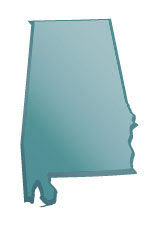
Alabama’s Department of Human Resources serves hundreds of thousands of residents — families in crisis, adults with disabilities, children in foster care, seniors aging in place. Behind every one of those cases is a trained human services professional. If you’re considering this field, Alabama is a state where the need is real, and the job market reflects it.
This guide covers what a human services degree prepares you for in Alabama, how salary and job growth break down by role, and what your path looks like from education to licensure.


What You Can Do with a Human Services Degree in Alabama
Your career options depend heavily on what degree level you pursue and which concentration you choose. A bachelor’s degree opens the door to entry-level roles in direct services and case management. A master’s degree unlocks clinical licensure and supervisory positions. A doctorate adds teaching and research to the list.
Here’s how the major degree paths break down in Alabama:
| Degree Level | Alabama Licensure Options | Example Careers |
|---|---|---|
| Bachelor of Social Work (BSW) | Licensed Baccalaureate Social Worker (LBSW) | Case management aide, community outreach worker, probation officer, rehabilitation case worker, juvenile court liaison |
| Master of Social Work (MSW) — CSWE-accredited | Licensed Graduate Social Worker (LGSW), Licensed Certified Social Worker (LCSW), Private Independent Practice Social Worker | Child welfare case manager, marriage and family therapist, social and community service manager, clinical social worker |
| Doctorate (DSW or PhD) | All LCSW-level licensure plus academic credentials | Faculty at Alabama colleges and universities, research director, senior program administrator |
One credential distinction worth knowing: the LCSW (Licensed Certified Social Worker) is Alabama’s clinical-level license. It requires a CSWE-accredited MSW, supervised post-graduate hours, and passing a licensing exam. Without it, you can’t provide independent clinical services. If therapy or private practice is your goal, make sure your graduate program is CSWE-accredited before you enroll.
Human Services Salaries in Alabama
Alabama salaries in human services fall below national medians across most roles, a common pattern in the South. That said, salaries still vary meaningfully by role and experience level. There’s a significant difference between where you start and where you can land.
| Occupation | Alabama Median Annual Salary | Alabama 75th Percentile |
|---|---|---|
| Social and Community Service Managers | $65,160 | $88,880 |
| Substance Abuse, Behavioral Disorder, and Mental Health Counselors | $48,880 | $58,540 |
| Social Workers | $46,890 | $59,310 |
| Social and Human Services Assistants | $34,040 | $39,580 |
According to the Bureau of Labor Statistics, social and community service managers in Alabama earn a median of $65,160, with experienced professionals at the 75th percentile reaching $88,880. Social workers earn a median of $46,890. Counselors working in substance abuse and mental health earn a median of $48,880, a role with strong growth projections. For licensure steps in that counseling track, see our Alabama substance abuse counselor certification guide.
Job Growth Outlook in Alabama
Alabama’s human services workforce is growing. BLS projections for 2022–2032 show consistent demand across every major category in the field:
- Social and Human Services Assistants: 4,080 to 4,320 jobs projected, 5.9% growth, with 450 average annual openings
- Social and Community Service Managers: 3,040 to 3,220 jobs projected, 5.9% growth, with 260 average annual openings
- Healthcare Social Workers: 2,440 to 2,610 jobs projected, 7% growth, with 230 average annual openings
- Mental Health and Substance Abuse Social Workers: 1,530 to 1,650 jobs projected, 7.8% growth, with 120 average annual openings
- Child, Family, and School Social Workers: 3,840 to 3,950 jobs projected, 2.9% growth, with 310 average annual openings
The Birmingham-Hoover metro area — home to about one-quarter of Alabama’s population — holds the largest concentration of employers, including major employers such as UAB Health System, the Alabama Department of Human Resources, and Children’s of Alabama. But Montgomery, Huntsville, Tuscaloosa, and Mobile also have active human services job markets.
How to Start a Human Services Education in Alabama
The first decision is figuring out which career path fits what you actually want to do day to day. A BSW is right if you want to get into direct services quickly. An MSW is the path if you want clinical work, supervision, or private practice. A doctorate makes sense if research or teaching is your end goal.
Once you’ve landed on a direction, the key criteria for choosing a program are accreditation and alignment with licensure requirements. For social work, that means a CSWE-accredited program. For counseling, CACREP (Council for Accreditation of Counseling and Related Educational Programs) accreditation is not strictly required in Alabama. Still, it is widely preferred and can simplify the Licensed Professional Counselor (LPC) licensure process. Explore MSW programs in Alabama to find CSWE-accredited options in the state.
After you’ve identified programs, you’ll apply directly through each school’s admissions process. If you need financial aid, complete the FAFSA at studentaid.gov, the starting point for federal grants, work-study, and loan eligibility.
Frequently Asked Questions
What’s the difference between a human services degree and a social work degree in Alabama?
A human services degree is broader and more flexible. It prepares you for a range of community and social services roles. A social work degree (BSW or MSW) is a licensed profession in Alabama with specific credential requirements. If you want to become a Licensed Certified Social Worker (LCSW) and provide clinical services, you need a CSWE-accredited social work degree, not just a general human services credential.
Do I need a license to work in human services in Alabama?
It depends on the role. Many human services positions, including case managers, community outreach workers, and human services assistants, don’t require state licensure. Social workers practicing at the clinical level do need licensure from the Alabama State Board of Social Work Examiners. Counselors providing mental health services typically need an LPC or similar license. Check the Alabama Social Work License guide for credential-specific requirements before choosing a degree.
What cities in Alabama have the most human services jobs?
Birmingham is by far the largest market, driven by UAB’s health system, the state DHR office, and a dense nonprofit sector. Montgomery has significant state agency employment. Huntsville’s growing population has expanded demand for social services. Tuscaloosa and Mobile round out the major markets. Rural areas throughout the state also have documented shortages of mental health and social services professionals.
Is an online human services degree from an Alabama school worth it?
For many roles, yes, especially at the bachelor’s level in a general human services program. The key caveat is accreditation: if you’re working toward social work licensure, make sure CSWE accredits the online program. For counseling licensure, CACREP accreditation is preferred and can streamline LPC eligibility. An online degree from a non-accredited program won’t qualify you to sit for the licensing exams you’ll need for clinical roles.
Key Takeaways
- Degree level determines your ceiling. A BSW gets you into direct services. An LCSW-track MSW from a CSWE-accredited program opens clinical and private practice roles.
- Alabama salaries vary significantly by role. Social and community service managers earn a median of $65,160, while human services assistants earn $34,040. Experience and licensure move the needle.
- Job growth is steady across the board. BLS projects 5.9–7.8% growth across Alabama’s main human services occupations through 2032, with hundreds of openings per year.
- Accreditation is non-negotiable for licensure. CSWE for social work, CACREP for counseling. Confirm before you enroll.
Ready to explore your options? Find licensing requirements and CSWE-accredited programs in your state.
2024 US Bureau of Labor Statistics salary and employment figures for Social Workers, Social and Human Services Assistants, Social and Community Service Managers, and Substance Abuse, Behavioral Disorder, and Mental Health Counselors, reflect state and national data, not school-specific information. Conditions in your area may vary. Data accessed April 2026.