Social Work Licensure in Pennsylvania
Pennsylvania issues three social work licenses: the Licensed Baccalaureate Social Worker (LBSW), the Licensed Social Worker (LSW), and the Licensed Clinical Social Worker (LCSW). The LBSW requires a bachelor’s degree. The LSW and LCSW both require a master’s degree. The LCSW is the highest level and allows independent clinical practice.
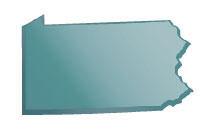
Pennsylvania has three levels of social work licensure, and which one you pursue depends on your degree level and where you want your career to go. The LBSW is the entry point for bachelor’s-level social workers. The LSW and LCSW both require a master’s degree, but the LCSW adds supervised clinical experience and qualifies you to work independently with clients. Understanding the differences before you choose a graduate program matters more than most people realize.
The State Board of Social Workers, Marriage and Family Therapists, and Professional Counselors administers all three licenses. Requirements and fees are subject to change, so always confirm current details with the board before you apply. Current information can be found at the State of Pennsylvania’s licensing board website.
Find the license level that applies to you:
- Licensed Baccalaureate Social Worker (LBSW)
- Licensed Social Worker (LSW)
- Licensed Clinical Social Worker (LCSW)


Pennsylvania Social Work License Comparison
The table below shows how Pennsylvania’s three social work licenses compare at a glance. Each credential has different education, exam, and experience requirements.
| License | Degree Required | ASWB Exam | Supervised Hours | Independent Practice |
|---|---|---|---|---|
| LBSW | BSW (CSWE-accredited) | Bachelor’s level | None required | No — must practice under supervision |
| LSW | MSW from a CSWE-accredited program (doctoral degrees may be accepted; confirm with the board) | Master’s level | None required | Limited — cannot provide clinical services independently |
| LCSW | MSW from a CSWE-accredited program (doctoral degrees may be accepted; confirm with the board) + LSW required first | Clinical level | 3,000 post-MSW hours (min. 2 years) | Yes — full independent clinical practice |
Licensed Baccalaureate Social Worker (LBSW)
The LBSW is Pennsylvania’s entry-level social work license for those who hold a bachelor’s degree. It lets you work in social services settings under the supervision of a licensed LSW or LCSW, in roles such as case management, patient assessment, and community referrals. It won’t qualify you for independent or clinical practice, but it’s a meaningful credential while you build toward a master’s degree.
To qualify for the LBSW, you’ll need to:
- Hold a Bachelor of Social Work (BSW) from a Council on Social Work Education (CSWE)-accredited program
- Complete 3 hours of Board-approved continuing education in child abuse recognition and reporting before your initial license is issued
- Pass the Association of Social Work Boards (ASWB) Bachelor’s level exam
- Submit your application through Pennsylvania’s online licensing system (PALS)
The LBSW must be renewed every two years. Renewal requires 30 hours of continuing education, including at least 3 hours in ethics and at least 1 hour in suicide prevention. Child abuse recognition and reporting CE is also required: 3 hours for initial licensure and 2 hours for each subsequent renewal.
Licensed Social Worker (LSW)
The LSW requires a master’s or doctoral degree in social work and allows you to work with individuals, families, and groups on behavioral and mental health issues. It’s a substantial step up from the LBSW in both scope and responsibility. However, the LSW doesn’t qualify you to provide clinical social work services independently in Pennsylvania. That requires the LCSW. In practice, you must hold an LSW before qualifying for the LCSW in Pennsylvania, so most clinically-oriented social workers treat the LSW as a required step rather than a final destination.
To qualify for the LSW, you’ll need to:
- Hold an MSW from a CSWE-accredited program (doctoral degrees may be accepted; confirm with the board)
- Provide two professional references from Licensed Clinical Social Workers (LCSWs) or licensed health care professionals
- Complete 3 hours of Board-approved continuing education in child abuse recognition and reporting before your initial license is issued
- Pass the ASWB Master’s level exam
- Submit your application through PALS
You may apply to take the ASWB Master’s exam during the final semester of your MSW program. The Education Verification form, completed by your school, allows early eligibility. Once you pass and your application is complete, your official transcripts must be submitted directly from your school to the Board.
The LSW renews every two years. The same 30-hour continuing education requirement applies, including ethics, suicide prevention, and child abuse CE: 3 hours for initial licensure and 2 hours for each subsequent renewal.
Licensed Clinical Social Worker (LCSW)
The LCSW is the highest level of social work licensure in Pennsylvania. It qualifies you to diagnose and treat mental health conditions and practice clinical social work independently, without supervision. To get there, you first need your LSW.
To qualify for the LCSW, you’ll need to:
- Hold a current Pennsylvania LSW license
- Hold an MSW from a CSWE-accredited program (doctoral degrees may be accepted; confirm with the board)
- Complete 3,000 hours of supervised post-MSW clinical experience, accumulated over no fewer than 2 years and no more than 6 years, with at least 500 and no more than 1,500 hours per 12-month period
- Ensure at least 1,500 of your clinical hours involve face-to-face contact with clients
- Complete at least 150 hours of supervision, generally structured at a minimum ratio equivalent to 2 hours per 40 hours of clinical work, per board guidelines
- Pass the ASWB Clinical level exam
Pennsylvania’s supervision requirements are detailed, and format rules may have changed. Supervision must meet board requirements for format and ratio. Some remote supervision may be permitted. Confirm current rules with the board before making arrangements with a supervisor.
The LCSW renewal occurs every 2 years with the same 30-hour continuing education requirement. Up to 20 of those hours may be completed online, but no single course can be repeated more than once per year.
Reciprocity and Licensure by Endorsement
Pennsylvania does not offer automatic licensure reciprocity but does provide licensure by endorsement for qualified applicants. If you’re already licensed as a social worker in another state and want to practice in Pennsylvania, you’ll need to meet Pennsylvania’s full examination and education requirements, unless you can demonstrate that the ASWB exam you took is equivalent to Pennsylvania’s standard. If it aligns, you may be able to apply without retaking it. If it doesn’t, you’ll need to sit for the corresponding ASWB exam. ASWB exam fees are approximately $260 (clinical) and $230 (master’s), subject to change.
Pennsylvania has considered joining the Social Work Licensure Compact, which would allow greater license portability across member states. Check the board website for the current status on this legislation.
What Social Workers Earn in Pennsylvania
According to the U.S. Bureau of Labor Statistics (May 2024 data, released 2025), child, family, and school social workers (SOC 21-1021) in Pennsylvania earn a median annual salary of $51,030. The lower half of earners typically bring in between $38,070 and $51,030, while those in the upper range earn between $63,890 and $78,020. Pennsylvania has a large social work workforce, with 18,200 workers employed statewide.
Job growth is steady across social work specializations. Pennsylvania projects a 4.5% increase in child, family, and school social work positions between 2022 and 2032, with an average of 1,760 job openings per year (Projections Central / Pennsylvania Department of Labor). Mental health and substance abuse social workers (SOC 21-1023) are projected to grow at 7.9% over the same period, with approximately 600 openings annually. Healthcare social workers show similar momentum, with 7.4% projected growth and around 620 annual openings statewide.
Frequently Asked Questions
Do I need an LSW before I can apply for the LCSW in Pennsylvania?
Yes. In practice, you must hold a current LSW license before applying for the LCSW in Pennsylvania. Most applicants move through the LSW first and treat it as a required step on the path to clinical licensure.
Can I start accumulating supervised clinical hours before I have my LSW?
No. The 3,000 supervised clinical hours required for the LCSW must be completed after you’ve earned your MSW degree. Hours completed before that won’t count toward the requirement.
How long does it typically take to become an LCSW in Pennsylvania?
At minimum, the path takes around four years of graduate and post-graduate work: two years for a full-time MSW program (less for advanced standing), followed by at least two years of supervised clinical experience before you’re eligible for the LCSW. Part-time MSW programs will extend that timeline.
Does Pennsylvania offer social work licensure reciprocity with other states?
Pennsylvania does not offer automatic licensure reciprocity but does provide licensure by endorsement for out-of-state LCSWs who can demonstrate equivalent exam credentials. Pennsylvania has also considered joining the Social Work Licensure Compact. Check the state board website for the current status.
What continuing education is required to renew a Pennsylvania social work license?
All three license levels require 30 hours of continuing education every two years. This must include at least 3 hours in professional ethics, at least 1 hour in suicide prevention, and CE on child abuse recognition and reporting: 3 hours for initial licensure and 2 hours for each subsequent renewal. Up to 20 of the 30 hours may be completed online.
Key Takeaways
- Three license levels: Pennsylvania issues the LBSW (bachelor’s), LSW (master’s), and LCSW (clinical/master’s). Each has different requirements and authority to practice.
- LSW comes before LCSW: In practice, you must hold a current LSW before qualifying for clinical licensure in Pennsylvania.
- LCSW requires 3,000 supervised hours: Accumulated over at least two years post-MSW, with specific supervision ratios and face-to-face client contact requirements.
- CSWE accreditation is required: Your BSW or MSW program must be from a CSWE-accredited school. Doctoral degree eligibility should be confirmed with the board.
- Continuing education is ongoing: All licenses require 30 CE hours every 2 years, including mandatory topics such as ethics, suicide prevention, and child abuse recognition.
2024 US Bureau of Labor Statistics salary and employment figures for Social Workers, Social and Human Services Assistants, Social and Community Service Managers, and Substance Abuse, Behavioral Disorder, and Mental Health Counselors, reflect state and national data, not school-specific information. Conditions in your area may vary. Data accessed April 2026.