MSW Programs in Massachusetts: Degrees, Licensure, and Careers
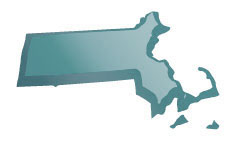
A Master of Social Work (MSW) in Massachusetts opens doors to licensed clinical practice, child welfare, healthcare, and community service roles. The state has four licensure tiers, and the highest levels require a CSWE-accredited MSW. According to the Bureau of Labor Statistics, Massachusetts social workers earn a median salary of $67,880 annually.
Massachusetts has one of the most developed social services ecosystems in the country. Boston is home to major hospital networks, behavioral health systems, and public agencies that employ licensed social workers at every level. Outside the city, communities across the state deal with aging populations, opioid recovery needs, child welfare caseloads, and refugee resettlement. Trained social workers are in demand across all of those areas.
If you want to practice social work at the clinical level in Massachusetts, you’ll need more than good intentions and a bachelor’s degree. You’ll need an MSW, and probably a license to go with it. Here’s what that path looks like.


Why the MSW Is the Degree That Opens Doors
A Bachelor of Social Work can get you into entry-level human services roles. But in Massachusetts, most clinical positions, supervisory roles, and independent practice settings require a master’s degree. The Licensed Independent Clinical Social Worker (LICSW) is the highest level of licensure in the state and is available only to MSW holders who’ve completed the required supervised clinical experience.
Even if you don’t plan to go into clinical practice, an MSW gives you more career options and typically higher pay. Social and community service managers, school social workers, and healthcare social workers in Massachusetts almost uniformly hold master’s-level credentials. The degree isn’t just a professional stepping stone. It’s the dividing line between entry-level and professional-level work in much of the state.
Massachusetts Social Work Licensure: Four Tiers
Massachusetts uses a four-tier licensure structure administered by the Board of Registration of Social Workers. Understanding which tier matches your career goals is one of the most important decisions you’ll make when choosing a program. The MSW is required for three of the four levels.
| License | Education Required | Clinical Supervision | Practice Scope |
|---|---|---|---|
| LSWA (Licensed Social Work Associate) | Bachelor’s degree (BSW or related field) | Required while working toward LSW | Entry-level generalist social work |
| LSW (Licensed Social Worker) | Bachelor’s degree (BSW or related field) or MSW | None required post-licensure | Generalist social work. Independent clinical practice requires an LCSW or LICSW. |
| LCSW (Licensed Certified Social Worker) | MSW from a CSWE-accredited program | Minimum 2 years and ~3,500 hours of supervised clinical experience | Clinical practice under supervision |
| LICSW (Licensed Independent Clinical Social Worker) | MSW from a CSWE-accredited program | Additional ~3,500 supervised clinical hours over at least 2 years beyond LCSW | Independent clinical and private practice |
Verify current hour requirements directly with the Board of Registration of Social Workers, as these can change. For a full breakdown of licensure steps in Massachusetts, see our Massachusetts social work licensure guide.
CSWE Accreditation and Advanced Standing Programs
If clinical licensure is your goal, the program you choose needs to be accredited by the Council on Social Work Education (CSWE). Schools without that accreditation won’t qualify you for the LCSW or LICSW, so this isn’t a detail to overlook. Massachusetts has 12 fully accredited MSW programs and one program in candidacy status as of 2024.
| School | Location(s) | Format | CSWE Status |
|---|---|---|---|
| Anna Maria College | Paxton, MA | On-campus, Online | Accredited (2017) |
| Boston College | Chestnut Hill, MA | On-campus | Accredited (1936) |
| Boston University | Boston + multiple MA sites | On-campus, Online | Accredited (1939) |
| Bridgewater State University | Bridgewater, MA | On-campus | Accredited (2003) |
| Elms College | Chicopee, MA | On-campus | Candidacy (2024) |
| Lesley University | Cambridge, MA | On-campus | Accredited (2020) |
| Merrimack College | North Andover, MA | On-campus | Accredited (2022) |
| Regis College | Online | Online | Accredited (2018) |
| Salem State University | Salem, MA | On-campus, Online | Accredited (1977) |
| Simmons University | Boston, MA | On-campus, Online | Accredited (1919) |
| Smith College | Northampton, MA | On-campus | Accredited (1919) |
| Springfield College | Springfield, MA | On-campus, Online | Accredited (1989) |
| Westfield State University | Westfield, Worcester, MA | On-campus, Online | Accredited (2010) |
Note that Elms College currently holds candidacy status, not full accreditation. CSWE candidacy means the program is working toward accreditation but hasn’t yet met all standards. Graduates of candidate programs may or may not be treated as graduates of accredited programs, depending on when they enrolled. Confirm directly with Elms and with the Board of Registration before making enrollment decisions based on licensure eligibility. If cost is a factor in your decision, see our guide to the most affordable CSWE-accredited programs nationwide.
If you already hold a BSW from a CSWE-accredited program, you may be eligible for an Advanced Standing track. These programs let you complete your MSW in as little as one year by waiving the foundational coursework. Not every school offers Advanced Standing, and requirements vary, so confirm directly with programs you’re considering.
Online vs. On-Campus MSW Programs
Most CSWE-accredited programs in Massachusetts now offer online or hybrid formats, and several out-of-state schools offer fully online MSW programs that allow Massachusetts field placements. Online programs can be a practical fit if you’re working while in school or need schedule flexibility. The tradeoff is that field education, the supervised practicum component required of all MSW programs, still has to happen in person in a community placement, regardless of how your coursework is delivered.
Campus-based programs may offer stronger local networking, easier access to faculty, and tighter integration with regional field placement sites. If you know you want to work in a specific region of Massachusetts after graduation, a local program can help you build those connections before you finish your degree.
Social Work Salaries and Job Outlook in Massachusetts
According to the Bureau of Labor Statistics, Massachusetts social workers earn a median annual salary of $67,880 as of May 2024, above the national median for the occupation. Mean earnings for the state’s 9,830 employed social workers are $70,620, with the top quarter of earners exceeding $87,150 annually.
Job growth projections vary by specialty. The BLS projects 10.6% growth nationally for mental health and substance abuse social workers through 2032, and 9.6% growth for healthcare social workers, both well above average for all occupations. Child, family, and school social workers are projected to grow 5.3% nationally over the same period, generating an average of 29,500 job openings per year.
Massachusetts consistently ranks among the higher-paying states for social workers, which reflects both the cost of living and the concentration of hospitals, behavioral health systems, and public agencies in the region. For a broader look at earnings by specialty and degree level, see our MSW salary guide.
Frequently Asked Questions
Do I need a CSWE-accredited MSW to get licensed in Massachusetts?
Yes, for the LSW, LCSW, and LICSW (the three MSW-level licenses in Massachusetts), the Board of Registration of Social Workers requires that your degree be from a CSWE-accredited program. If your goal is clinical practice or independent licensure, verify accreditation status before enrolling.
What’s the difference between the LCSW and the LICSW in Massachusetts?
Both require an MSW and supervised clinical hours, but the LICSW is the higher credential and allows for fully independent practice, including private practice. The LCSW is a stepping stone that requires additional supervision. Most social workers working toward private practice aim for the LICSW.
Can I complete my MSW in Massachusetts online?
Many schools offer online or hybrid MSW formats, including several Massachusetts-based programs and out-of-state schools that allow local field placements. The practicum component must still be completed in person at an approved site, so full online completion depends on your proximity to qualifying placement locations.
What is an Advanced Standing MSW program?
Advanced Standing programs are designed for students who already hold a BSW from a CSWE-accredited school. They waive the foundational year of coursework, allowing students to complete the MSW in about 1 year instead of 2. Not every school offers this track, and eligibility requirements vary by program.
What careers can I pursue with an MSW in Massachusetts?
MSW graduates in Massachusetts work across healthcare, schools, child welfare agencies, behavioral health centers, nonprofits, and government agencies. Common roles include licensed clinical social worker, school social worker, healthcare social worker, child welfare case manager, and social and community service manager. Clinical licensure opens additional options, including private practice and specialized mental health treatment roles.
Key Takeaways
- The MSW is the gateway to clinical licensure. All three upper-tier social work licenses in Massachusetts require a master’s degree from a CSWE-accredited program.
- Massachusetts has four licensure tiers. They range from the entry-level LSWA to the LICSW, which allows for a fully independent clinical and private practice.
- CSWE accreditation is non-negotiable for clinical paths. Verify a program’s accreditation status before enrolling if licensure is your goal.
- Advanced Standing tracks exist for BSW holders. Eligible students may complete the MSW in as little as one year at programs that offer this option.
- Massachusetts pays above the national median. The BLS reports a median social worker salary of $67,880 in Massachusetts as of May 2024.
Ready to explore your options? Visit our Massachusetts social work licensure guide for a full breakdown of requirements, supervised hours, and exam details by license tier.
2024 US Bureau of Labor Statistics salary and employment figures for Social Workers, Social and Human Services Assistants, Social and Community Service Managers, and Substance Abuse, Behavioral Disorder, and Mental Health Counselors, reflect state and national data, not school-specific information. Conditions in your area may vary. Data accessed April 2026.