How to Become a Psychologist
Becoming a psychologist requires a bachelor’s degree, a doctoral degree (PhD or PsyD) from an APA-accredited program or one that meets state board requirements, supervised postdoctoral hours, and passing the Examination for Professional Practice in Psychology (EPPP). The full process takes 8 to 12 years. Requirements vary by state, so always verify with your state’s board of psychology.
Most people drawn to psychology want to do serious work: assess and treat mental health conditions, conduct psychological testing, and help individuals who are dealing with complex, chronic challenges. The licensed psychologist credential is what enables that scope of practice. It’s also what separates a psychologist from a therapist or counselor at the master’s level. In the U.S., “psychologist” is a legally protected title regulated at the state level.
The path to licensure is one of the longer credentialing tracks in human services. Expect 8 to 12 years from undergraduate enrollment to independent practice. But the career is broad, in demand, and well-compensated across a wide range of settings. Here’s what the process actually involves.


What Does a Psychologist Do?
Psychologists study and apply knowledge of human behavior, emotion, and cognition. In practice, that covers more than therapy. Clinical and counseling psychologists assess and treat mental health conditions, administer standardized psychological tests, write evaluation reports, and develop individualized treatment plans. School psychologists work with students on learning, behavioral, and developmental challenges. Industrial-organizational (I-O) psychologists apply behavioral science to workplace issues, from hiring and performance assessment to organizational design.
What most psychologists share is a commitment to evidence-based assessment. They don’t just talk with clients. They gather data, interpret results, and make decisions that have real consequences for the people they serve. The depth of training that work requires is why the credential demands a doctorate.
Psychology Specializations
Choosing a focus early helps you select the right doctoral program and internship placements. These are the most common applied specializations:
| Specialization | Primary Focus | Common Work Settings |
|---|---|---|
| Clinical Psychology | Assessment and treatment of mental health conditions | Hospitals, private practice, and community mental health centers |
| Counseling Psychology | Emotional, social, and vocational adjustment across the lifespan | University counseling centers, private practice, and VA settings |
| School Psychology | Learning, behavioral, and developmental needs in students | K-12 schools, school districts, and educational agencies |
| Industrial-Organizational | Workplace behavior, employee selection, and organizational dynamics | Corporations, consulting firms, government agencies |
| Forensic Psychology | Psychology applied to legal and criminal justice contexts | Courts, correctional facilities, law enforcement agencies |
| Neuropsychology | Brain-behavior relationships and cognitive assessment | Hospitals, rehabilitation centers, and research institutions |
How to Become a Licensed Psychologist: Step by Step
Step 1: Earn a Bachelor’s Degree
A bachelor’s degree in psychology is the typical starting point, though doctoral programs also accept applicants with undergraduate backgrounds in related fields such as sociology, biology, or education. Use your undergraduate years well. Take coursework in research methods, statistics, and abnormal psychology. Volunteer or work in a psychology-related setting. Competitive doctoral programs want to see both academic preparation and real-world experience when they review your application.
Step 2: Complete a Doctoral Program
Most states require a doctorate for independent licensure as a psychologist. You’ll choose between a Doctor of Philosophy (PhD) and a Doctor of Psychology (PsyD). PhD programs are research-focused, often funded through assistantships or stipends, and typically take five to seven years to complete. PsyD programs emphasize clinical practice over research, typically take four to six years, but usually require tuition rather than funding. Both degree types qualify graduates for licensure when the program is accredited by the American Psychological Association (APA) or meets requirements set by your state’s board of psychology. A master’s degree isn’t always required first. Many doctoral programs admit students directly from a bachelor’s degree.
Step 3: Complete a Predoctoral Internship
A one-year, APA-accredited predoctoral internship is a required part of your doctoral training. These are competitive placements in clinical, counseling, school, or health service settings. Most students apply through the Association of Psychology Postdoctoral and Internship Centers (APPIC) matching program. Your internship is where clinical skills get consolidated under close supervision before you move into independent practice.
Step 4: Log Supervised Postdoctoral Hours
After you earn your doctorate, most states require a period of supervised postdoctoral experience before you can sit for the licensing exam. Requirements vary by state, but a common benchmark is 1,500 to 2,000 hours supervised by a licensed psychologist. Some states count hours from your doctoral training toward this total. Others require all postdoctoral hours to be completed after the degree is conferred. Check your state’s board of psychology website for the exact requirements in the jurisdiction where you plan to practice.
Step 5: Pass the EPPP and Apply for State Licensure
The Examination for Professional Practice in Psychology (EPPP) is required for licensure in all U.S. jurisdictions. It’s a computer-based exam covering eight content areas, including the biological bases of behavior, the cognitive-affective bases of behavior, assessment and diagnosis, and treatment and intervention. Some states also require a jurisprudence exam, oral exam, or other state-specific assessment in addition to the EPPP. Once you’ve passed all required exams, you submit a licensure application to your state’s psychology board along with transcripts, supervision documentation, professional references, and applicable fees.
How Long Does It Take to Become a Psychologist?
The full timeline from undergraduate enrollment to licensure is typically 8 to 12 years. A rough breakdown looks like this:
- Bachelor’s degree: 4 years
- Doctoral program (PhD or PsyD), including predoctoral internship: 4 to 7 years
- Supervised postdoctoral hours: 1 to 2 years
- Exam preparation and application processing: a few additional months
School psychologists often have a shorter path. In many states, an Education Specialist (EdS) degree in school psychology is sufficient for school-based practice, and that typically takes about three years after a bachelor’s degree. If your goal is specifically to work in K-12 settings, that route is worth researching before committing to a doctoral program.
Career Outlook for Psychologists
Recent Bureau of Labor Statistics projections estimate about 12,900 job openings for psychologists per year over the coming decade. Employment is projected to grow by about 6% through 2034, faster than the average projected growth across all occupations. Much of that demand is driven by the growing need for mental health services in healthcare settings, schools, and private practice.
Salaries vary considerably by specialization and work setting. Industrial-organizational psychologists tend to earn more than clinical or counseling psychologists. School psychologists typically fall somewhere between. Geographic location and whether you work in a salaried institutional role versus independent practice also affect compensation significantly.
Frequently Asked Questions
Do I need a doctorate to become a psychologist?
In nearly all states, yes. To use the title “psychologist” and practice independently, you’ll need a doctoral degree, either a PhD or PsyD in psychology, from a program that meets your state board’s requirements. Some states allow master’s-level practitioners to perform certain psychological services under a different credential title, but independent licensure as a psychologist requires a doctorate in nearly all U.S. jurisdictions.
What is the difference between a PhD and a PsyD in psychology?
A PhD is a research-focused degree that typically takes five to seven years and is often funded through assistantships or stipends, making it less expensive than a PsyD. A PsyD is practice-focused, generally completed in four to six years, and usually requires students to pay tuition. Both qualify graduates for licensure when the program meets state board standards. Your choice should depend on whether you’re more drawn to research and academia or full-time clinical practice.
What is the EPPP?
The Examination for Professional Practice in Psychology (EPPP) is required for licensure in all U.S. jurisdictions. It’s a computer-based test covering eight content areas, from biological bases of behavior to ethical and legal standards. Most candidates take it after completing their doctoral degree and meeting their state’s supervised hour requirements.
How is a psychologist different from a therapist or counselor?
Therapists and counselors typically hold master’s-level degrees and focus on talk-based interventions. Psychologists hold doctoral degrees, are trained to administer and interpret psychological tests, can diagnose a broader range of conditions, and, in a small number of states, may prescribe medication after completing additional specialized training and certification. The scope of practice is wider, and the training timeline is significantly longer.
Do psychology licensing requirements vary by state?
Yes, they do. While nearly all states require a doctoral degree for independent licensure as a psychologist, the number of supervised hours required, whether a state exam is required, and other application details vary by state. Always verify current requirements directly with your state’s board of psychology before enrolling in a program.
Key Takeaways
- A doctorate is required for licensure in nearly all states. You’ll need a PhD or PsyD from a program that meets APA accreditation or state board standards to practice independently as a psychologist.
- The EPPP is required for licensure in all U.S. jurisdictions. Some states add a state-specific exam on top of it.
- Plan for 8 to 12 years from start to licensure. That includes a bachelor’s degree, doctoral training with a predoctoral internship, and supervised postdoctoral hours.
- Your specialization determines your career trajectory. Clinical, counseling, school, forensic, I-O, and neuropsychology all lead to different settings and roles. Note that some I-O psychologists work in research or corporate roles that may not require licensure.
- Requirements vary by state. Confirm current licensure requirements with your state’s board of psychology before choosing a program.
Ready to explore your options? Use our state-by-state guide to look up psychology licensing requirements and find accredited programs that match your career goals.
Recent Bureau of Labor Statistics projections estimate about 12,900 job openings for psychologists per year over the coming decade. Employment is projected to grow about 6% through 2034, which is faster than the average projected growth across all occupations. Much of that demand is driven by growing need for mental health services in healthcare settings, schools, and private practice.
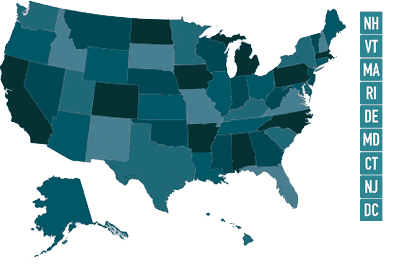
View Psychology Licensing Requirements By State
- Alabama
- Alaska
- Arizona
- Arkansas
- California
- Colorado
- Connecticut
- Delaware
- District of Columbia
- Florida
- Georgia
- Hawaii
- Idaho
- Illinois
- Indiana
- Iowa
- Kansas
- Kentucky
- Louisiana
- Maine
- Maryland
- Massachusetts
- Michigan
- Minnesota
- Mississippi
- Missouri
- Montana
- Nebraska
- Nevada
- New Hampshire
- New Jersey
- New Mexico
- New York
- North Carolina
- North Dakota
- Ohio
- Oklahoma
- Oregon
- Pennsylvania
- Rhode Island
- South Carolina
- South Dakota
- Tennessee
- Texas
- Utah
- Vermont
- Virginia
- Washington
- West Virginia
- Wisconsin
- Wyoming